Decoding 2026 US Dietary Guidelines: Your Guide to Optimal Health
In the ever-evolving landscape of health and wellness, staying informed about the latest nutritional science is paramount. For consumers in the United States, the upcoming US Dietary Guidelines 2026 represent a significant milestone, promising to reshape our understanding of optimal eating for well-being. These guidelines, released every five years, are not just recommendations; they are the bedrock of federal food and nutrition policy, influencing everything from school lunch programs to food labeling. As we approach their release, there’s a growing buzz about what these new guidelines might entail and, more importantly, what US consumers need to know to leverage them for their health.
The journey to the US Dietary Guidelines 2026 is a rigorous one, involving extensive scientific review by a panel of leading nutrition and public health experts. Their work synthesizes the latest research on diet, disease prevention, and health promotion across all life stages. This comprehensive approach ensures that the guidelines are evidence-based, practical, and relevant to the diverse needs of the American population. Understanding the process behind these guidelines helps us appreciate their scientific integrity and their potential impact on our daily food choices.
This article aims to be your comprehensive guide to the anticipated US Dietary Guidelines 2026. We’ll delve into the historical context of these guidelines, explore the scientific advancements likely to influence the 2026 edition, and discuss the key areas where changes are expected. Furthermore, we will provide actionable insights for US consumers to proactively prepare for and implement these recommendations, ensuring they are well-equipped to navigate the future of healthy eating. From understanding macro and micronutrient recommendations to embracing sustainable food practices, our goal is to empower you with the knowledge to make informed decisions for your optimal health.
The Foundation of American Nutrition: A Look Back at Previous Guidelines
Before we peer into the future with the US Dietary Guidelines 2026, it’s crucial to understand the legacy they build upon. The Dietary Guidelines for Americans (DGA) have been a cornerstone of public health since their inception in 1980. Initially conceived to address rising concerns about chronic diseases linked to diet, they have evolved considerably, reflecting scientific progress and shifting public health challenges.
Early editions of the DGA primarily focused on reducing fat, cholesterol, and sodium intake, with an emphasis on increasing fruit, vegetable, and grain consumption. The iconic Food Guide Pyramid, introduced in 1992, became a ubiquitous symbol of healthy eating, visually representing recommended food group proportions. While revolutionary for its time, the Pyramid faced criticism for its complexity and potential misinterpretations, leading to its eventual replacement.
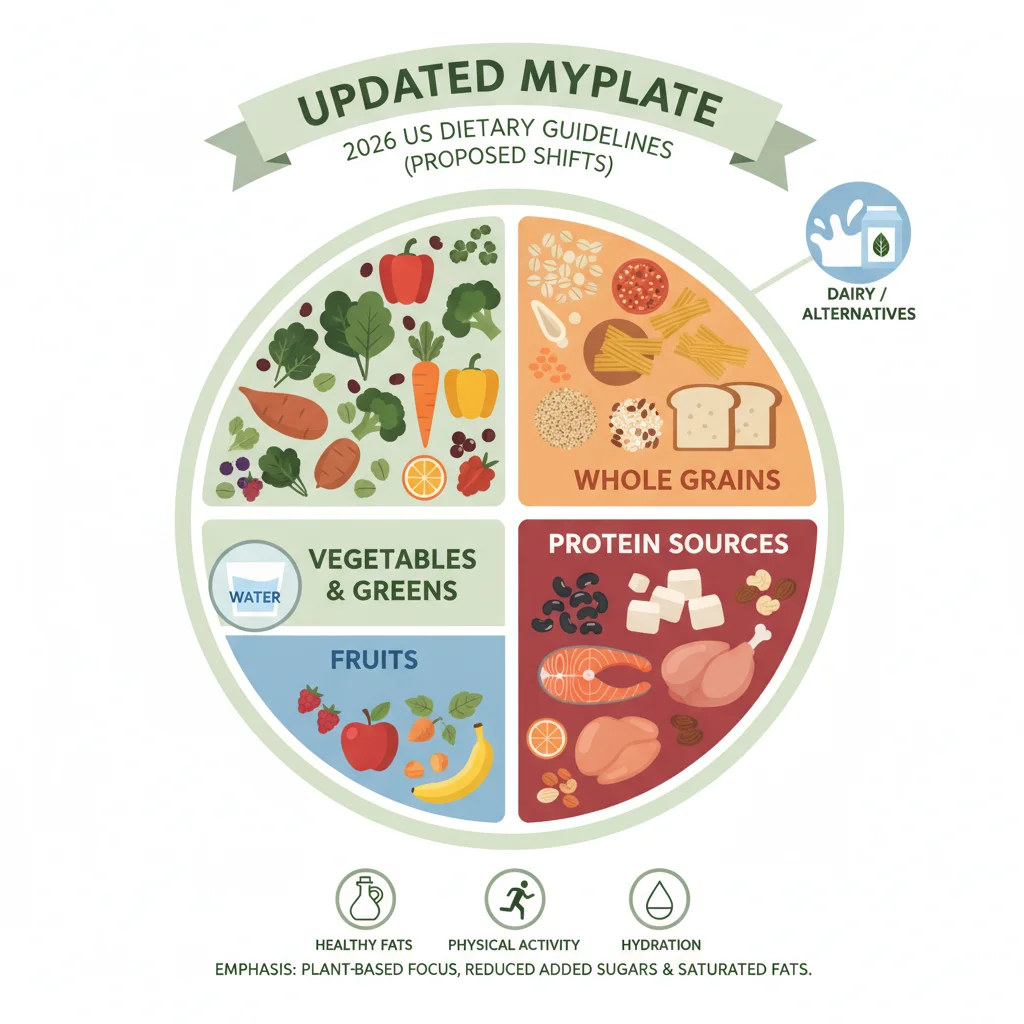
The 2005 guidelines introduced MyPyramid, an attempt to simplify the message and incorporate personalized dietary advice, including physical activity. However, it too proved somewhat complex for the average consumer. The most significant visual overhaul came with the 2011 guidelines, which unveiled MyPlate. MyPlate offered a simpler, plate-based visual guide, emphasizing proportionality across five food groups: fruits, vegetables, grains, protein, and dairy. This simpler, more intuitive design aimed to make healthy eating more accessible and understandable for a wider audience.
The 2015-2020 guidelines further refined these recommendations, focusing on dietary patterns rather than individual nutrients. They emphasized a variety of vegetables, fruits, whole grains, fat-free or low-fat dairy, a variety of protein foods, and oils, while limiting saturated and trans fats, added sugars, and sodium. These guidelines also introduced specific recommendations for different life stages, including pregnancy, lactation, and childhood, acknowledging the unique nutritional needs at various points in life.
The most recent 2020-2025 guidelines continued this trajectory, maintaining a strong emphasis on healthy dietary patterns and providing specific recommendations for infants and toddlers for the first time. They reinforced the importance of nutrient-dense foods and beverages, while still advising limits on added sugars, saturated fat, and sodium. A key takeaway from these guidelines was the concept that “every bite counts,” encouraging healthy choices at every meal and snack throughout the day.
Each iteration of the DGA has been a step forward, integrating new scientific discoveries and adapting to the evolving health landscape of the US. The upcoming US Dietary Guidelines 2026 are expected to continue this tradition, building upon the successes of previous editions while addressing contemporary challenges and leveraging the latest nutritional research. Consumers who understand this historical progression will be better prepared to interpret and apply the new recommendations.
Anticipated Scientific Advancements and Their Impact on US Dietary Guidelines 2026
The scientific community is constantly uncovering new insights into the intricate relationship between diet and health. As such, the US Dietary Guidelines 2026 are poised to incorporate several cutting-edge advancements that will likely influence their recommendations. One of the most significant areas of ongoing research is the human microbiome. We are increasingly understanding the profound impact of gut bacteria on digestion, immunity, mood, and even chronic disease development. It’s highly probable that the new guidelines will place a greater emphasis on foods that support a healthy gut microbiome, such as fermented foods, prebiotics, and a diverse range of plant-based fibers.
Another area of rapid development is personalized nutrition. While individualized dietary advice is complex to integrate into broad public health guidelines, the 2026 edition might acknowledge the concept of dietary needs varying based on genetics, lifestyle, and specific health conditions. This could manifest as more nuanced recommendations or a greater emphasis on consulting healthcare professionals for tailored advice, moving beyond a one-size-fits-all approach. The role of dietary patterns, rather than isolated nutrients, is also expected to be further solidified. The focus will likely remain on holistic eating habits that promote overall health, rather than fixating on single nutrients like fat or carbohydrates.
The science around sustainable diets is also gaining considerable traction. There’s a growing recognition that what we eat not only impacts our personal health but also the health of the planet. While the DGA has historically focused on human health, the US Dietary Guidelines 2026 might cautiously integrate considerations for environmental sustainability. This could mean recommendations that subtly encourage more plant-forward diets, emphasize reducing food waste, or promote consumption of locally sourced foods, aligning personal health with planetary well-being. However, the extent to which environmental sustainability will be explicitly addressed remains a subject of debate and careful consideration by the advisory committee.
Furthermore, research into ultra-processed foods (UPFs) has escalated, with numerous studies linking their high consumption to increased risks of obesity, cardiovascular disease, and other chronic conditions. It is highly probable that the US Dietary Guidelines 2026 will include stronger warnings or more explicit advice to limit the intake of UPFs. This would represent a significant shift from previous guidelines that often focused on individual components like added sugar or saturated fat, to a more holistic view of food processing and its impact on health. Consumers can expect to see more guidance on identifying and reducing their reliance on these highly processed items.
Finally, the role of sugar, particularly added sugars, continues to be a major public health concern. While previous guidelines have set limits, the US Dietary Guidelines 2026 may further refine these recommendations, perhaps with more specific guidance on different types of sugars or their sources. Similarly, the ongoing debate around saturated fats and their impact on cardiovascular health might see a nuanced update, moving beyond simple blanket restrictions to considering the food matrix in which these fats are consumed. These scientific advancements collectively provide a robust foundation for the expected changes in the US Dietary Guidelines 2026, ensuring they remain at the forefront of nutritional science.
Key Areas of Expected Change and Focus for 2026
Based on the ongoing scientific reviews and public health dialogues, several key areas are expected to see significant focus and potential changes in the US Dietary Guidelines 2026. These anticipated shifts will have direct implications for how US consumers approach their daily eating habits.
1. Emphasis on Plant-Forward Eating Patterns
Building on previous guidelines, the US Dietary Guidelines 2026 are likely to further strengthen the recommendation for plant-forward dietary patterns. This doesn’t necessarily mean a push for strict vegetarianism or veganism, but rather an encouragement to increase the proportion of plant-based foods – fruits, vegetables, whole grains, legumes, nuts, and seeds – in the diet. This emphasis is driven by the consistent evidence linking plant-rich diets to reduced risks of chronic diseases, better weight management, and improved gut health. Consumers can expect more detailed guidance on incorporating a wider variety of plant foods and perhaps tips for reducing dependence on animal proteins without compromising nutrient intake.
2. Refined Guidance on Added Sugars and Ultra-Processed Foods
As discussed, the negative health impacts of added sugars and ultra-processed foods (UPFs) are becoming increasingly clear. The US Dietary Guidelines 2026 are anticipated to provide even more explicit and perhaps stricter recommendations regarding their consumption. This could include lower percentage limits for calories from added sugars and more direct advice on identifying and minimizing UPFs in the diet. Consumers should prepare to scrutinize food labels more closely and prioritize whole, minimally processed foods. This shift will require a greater awareness of hidden sugars and additives in packaged goods.
3. Focus on Dietary Patterns Across the Lifespan
The 2020-2025 guidelines introduced recommendations for infants and toddlers, and the US Dietary Guidelines 2026 are expected to continue this holistic, lifespan approach. There will likely be refined guidance for pregnant and lactating individuals, children, adolescents, adults, and older adults, acknowledging their unique nutritional needs. This might include specific recommendations for nutrient-dense foods crucial during particular life stages, as well as strategies to prevent diet-related chronic diseases throughout life. For example, there might be stronger advice on bone health in older adults or brain development in young children.
4. Gut Health and the Microbiome
The burgeoning science of the gut microbiome is almost certain to influence the US Dietary Guidelines 2026. Expect to see recommendations that promote gut health, such as increasing fiber intake from diverse plant sources and potentially incorporating fermented foods. This isn’t just about digestion; a healthy gut microbiome is linked to improved immunity, reduced inflammation, and better mental health. Consumers will be encouraged to diversify their plant food intake to feed a wider array of beneficial gut bacteria.

5. Sustainable Dietary Practices (Potential Integration)
While a potentially contentious area, the advisory committee for the US Dietary Guidelines 2026 has been tasked with considering the concept of sustainable diets. While direct environmental mandates are unlikely, the guidelines might subtly encourage practices that are both healthy for individuals and beneficial for the planet. This could manifest as encouraging less food waste, promoting seasonal and local eating, or reinforcing the benefits of plant-forward diets, which generally have a lower environmental footprint. Consumers might see more information on how their food choices impact broader environmental health.
6. Rethinking Fats and Oils
The understanding of dietary fats has evolved significantly. While saturated fat reduction remains a general recommendation, the US Dietary Guidelines 2026 might offer more nuanced advice, differentiating between sources of saturated fats and emphasizing the importance of unsaturated fats (monounsaturated and polyunsaturated) from sources like avocados, nuts, seeds, and olive oil. The focus will likely remain on replacing unhealthy fats with healthier alternatives rather than simply reducing all fat intake. This will help consumers make more informed choices about cooking oils and dietary fat sources.
These anticipated changes underscore a continued move towards more holistic, evidence-based, and potentially more environmentally conscious dietary advice. For US consumers, staying informed about these shifts will be crucial for navigating the evolving landscape of healthy eating and making choices that support optimal health and well-being.
Practical Strategies for US Consumers to Prepare for 2026
With the US Dietary Guidelines 2026 on the horizon, proactive steps can help US consumers seamlessly transition to and benefit from the new recommendations. Preparing now means being ahead of the curve and establishing healthier habits before they become official guidelines.
1. Embrace Whole, Unprocessed Foods
One of the most consistent messages across all dietary guidelines, and likely a stronger one in the US Dietary Guidelines 2026, is the importance of whole, unprocessed foods. Start by gradually reducing your intake of ultra-processed items. Focus on filling your plate with fresh fruits, vegetables, whole grains (like oats, quinoa, brown rice), lean proteins (fish, poultry, beans, lentils), and healthy fats (avocado, nuts, seeds). Learning to cook more meals at home from scratch is an excellent way to gain control over ingredients and reduce reliance on processed foods.
2. Diversify Your Plant Intake
Given the likely emphasis on plant-forward diets and gut health, make an effort to eat a wider variety of plant foods. Challenge yourself to try new fruits, vegetables, and legumes each week. The more diverse your plant intake, the more diverse your gut microbiome will be, contributing to better overall health. Experiment with different types of beans, lentils, colorful vegetables, and whole grains. Consider incorporating fermented foods like yogurt, kefir, sauerkraut, or kimchi into your diet, which are excellent for gut health.
3. Become a Label Reading Expert
The US Dietary Guidelines 2026 are expected to reinforce limits on added sugars, saturated fats, and sodium. Make it a habit to read nutrition labels carefully. Look for the ‘Added Sugars’ line and aim to choose products with the lowest amounts. Be aware of different names for sugar (e.g., high-fructose corn syrup, dextrose, maltose). Pay attention to sodium content, especially in canned goods, processed meats, and frozen meals. Understanding these labels empowers you to make healthier choices even when buying packaged foods.
4. Hydrate Smartly
While often overlooked, proper hydration is fundamental to health. The US Dietary Guidelines 2026 will undoubtedly reiterate the importance of water as the primary beverage. Reduce your consumption of sugary drinks, including sodas, sweetened teas, and fruit juices with added sugars. Opt for plain water, sparkling water with a squeeze of lemon, or unsweetened tea. This simple change can significantly reduce your daily intake of empty calories and added sugars.
5. Practice Mindful Eating
Beyond what you eat, how you eat is also crucial. Mindful eating involves paying attention to your body’s hunger and fullness cues, eating slowly, and savoring your food. This practice can help prevent overeating, improve digestion, and foster a healthier relationship with food. Disconnect from screens during meals and focus on the experience of eating. The US Dietary Guidelines 2026 might implicitly or explicitly encourage such practices as part of a holistic approach to well-being.
6. Consult with Professionals
For personalized advice, especially if you have specific health conditions or dietary needs, consider consulting a Registered Dietitian Nutritionist (RDN). As the US Dietary Guidelines 2026 are broad recommendations for the general public, an RDN can help you tailor these guidelines to your individual circumstances, ensuring you meet all your nutritional requirements. They can provide guidance on meal planning, address food sensitivities, or help manage chronic diseases through diet.
7. Stay Informed
Keep an eye out for official announcements and resources from the U.S. Department of Agriculture (USDA) and the U.S. Department of Health and Human Services (HHS) regarding the release of the US Dietary Guidelines 2026. Reliable sources will provide the most accurate and up-to-date information. Following reputable health news outlets and nutrition professionals can also help you understand and implement the new guidelines effectively. Being informed is the first step towards empowered decision-making about your health.
Understanding the Broader Implications of the 2026 Guidelines
The influence of the US Dietary Guidelines 2026 extends far beyond individual plates, touching various facets of public health, education, and even the food industry. Understanding these broader implications helps to appreciate the profound impact these recommendations have on the nation’s health landscape.
Public Health Initiatives and Programs
The US Dietary Guidelines 2026 serve as the scientific basis for federal nutrition programs. This includes critical initiatives like the National School Lunch Program, the Special Supplemental Nutrition Program for Women, Infants, and Children (WIC), and meals provided to seniors. Changes in the guidelines directly translate into modifications in meal patterns, food procurement, and nutritional standards for these programs. For example, if the guidelines place a stronger emphasis on whole grains or specific types of vegetables, these programs will adapt their offerings accordingly, impacting millions of Americans, particularly vulnerable populations. This systematic integration ensures that consistent, evidence-based nutrition advice reaches a wide audience.
Food Industry and Innovation
The food industry pays close attention to the DGA. Anticipated shifts in the US Dietary Guidelines 2026, such as stronger recommendations against added sugars or ultra-processed foods, can drive significant innovation. Food manufacturers may reformulate products to align with the new guidance, reducing sugar content, increasing fiber, or developing healthier alternatives. This responsiveness can lead to a wider availability of healthier food options in supermarkets, making it easier for consumers to make better choices. Conversely, products that fall out of favor with the guidelines might see decreased demand, prompting companies to rethink their strategies.
Nutrition Education and Healthcare
Healthcare professionals, including doctors, nurses, and especially registered dietitians, rely on the US Dietary Guidelines 2026 as a foundational resource for patient education and counseling. The guidelines provide a standardized framework for discussing healthy eating, preventing chronic diseases, and managing diet-related conditions. Educational materials developed by health organizations, schools, and community centers will also be updated to reflect the latest recommendations, ensuring that the public receives consistent and current nutritional information. This widespread adoption helps to disseminate critical health messages effectively.
Research and Policy Development
The release of new guidelines often sparks further research. The specific questions and areas of focus in the US Dietary Guidelines 2026 can highlight gaps in current scientific understanding, thereby directing future research funding and priorities. Moreover, these guidelines inform policy debates at various levels of government, from local healthy eating initiatives to national agricultural policies. For instance, if the guidelines strongly advocate for sustainable food systems, it could influence agricultural subsidies or local food procurement policies, fostering a more resilient and healthier food environment.
Personal and Societal Health Outcomes
Ultimately, the goal of the US Dietary Guidelines 2026 is to improve the health of the American population. By providing clear, actionable advice, they aim to reduce the prevalence of diet-related chronic diseases such as type 2 diabetes, heart disease, obesity, and certain cancers. When a significant portion of the population adopts these recommendations, the cumulative effect can lead to substantial improvements in public health outcomes, reduced healthcare costs, and a more productive society. The guidelines empower individuals to take control of their health, but their broader impact is a testament to the power of evidence-based public health policy.
In essence, the US Dietary Guidelines 2026 are more than just a list of food recommendations; they are a powerful tool for shaping the future of health in America. Their influence permeates various sectors, driving change and fostering environments that support healthier eating patterns for all.
Conclusion: Embracing the Future of Healthy Eating with the 2026 Guidelines
As we anticipate the release of the US Dietary Guidelines 2026, it’s clear that these recommendations will be more than just an update; they will represent a synthesis of the latest nutritional science, public health imperatives, and potentially, a growing awareness of our planet’s health. For US consumers, this means an opportunity to refine and enhance their eating habits for optimal health and well-being.
The journey through the historical context of the DGA has shown us a continuous evolution, always striving for clearer, more effective, and more scientifically sound advice. The upcoming guidelines are expected to build upon this legacy, with a likely stronger emphasis on plant-forward eating, more stringent advice on limiting added sugars and ultra-processed foods, and a deeper appreciation for the role of the gut microbiome. The holistic, lifespan approach to nutrition will continue to be a cornerstone, ensuring that recommendations are relevant for every age and stage of life.
Preparing for the US Dietary Guidelines 2026 is not about drastic, overnight changes, but rather about gradual, sustainable shifts. By embracing whole, unprocessed foods, diversifying our plant intake, becoming adept at reading food labels, prioritizing water, and practicing mindful eating, we can proactively align our diets with the anticipated recommendations. These practical strategies are not just about following rules; they are about cultivating a healthier relationship with food and making informed choices that nourish both body and mind.
Furthermore, recognizing the broader implications of these guidelines – from shaping federal food programs to influencing the food industry and healthcare – empowers us to understand the collective effort required to foster a healthier nation. The US Dietary Guidelines 2026 are a testament to ongoing scientific discovery and a commitment to public health. By staying informed, adapting our habits, and engaging with these recommendations, US consumers can play an active role in building a healthier future for themselves, their families, and their communities. Let’s look forward to these new guidelines as a valuable resource for navigating the path to optimal health in the years to come.