2026 Travel Booking Trends: How 40% of US Travelers Secure Better Accommodation Deals

Decoding 2026 Travel Booking Trends: How 40% of U.S. Travelers Are Securing Better Deals on Accommodations
The travel industry is a dynamic beast, constantly evolving with technological advancements, shifting consumer behaviors, and global events. As we cast our gaze towards 2026, one of the most compelling narratives emerging is the increasing savviness of U.S. travelers, particularly when it comes to securing accommodation. A significant 40% of U.S. travelers are now consistently finding and leveraging strategies to obtain better deals on their stays, a trend that is reshaping how hotels, online travel agencies (OTAs), and even traditional tour operators approach their pricing and offerings. Understanding these travel booking trends is not just crucial for industry stakeholders but also invaluable for any traveler looking to maximize their budget and enhance their experience.
This comprehensive guide will delve deep into the intricacies of these emerging trends, exploring the ‘why’ and ‘how’ behind this growing segment of deal-savvy travelers. We’ll examine the tools, techniques, and mindsets that are enabling a substantial portion of the American traveling public to unlock unparalleled value in their accommodation choices. From the rise of AI-powered price prediction to the strategic use of loyalty programs and the art of flexible planning, prepare to uncover the secrets to smarter travel in 2026 and beyond.
The Evolving Landscape of Travel Booking
The days of simply walking into a hotel and asking for the best rate are largely a relic of the past. Today’s travel booking environment is a complex ecosystem driven by data, algorithms, and an abundance of choices. The internet has democratized access to information, empowering consumers like never before. This empowerment is a key factor in the statistic that 40% of U.S. travelers are securing better deals. They are not just passively accepting prices; they are actively seeking out value.
Several macro and micro trends contribute to this evolution. Economically, travelers are more budget-conscious, especially after periods of uncertainty, making every dollar spent on travel count. Technologically, the proliferation of sophisticated booking platforms, meta-search engines, and mobile applications has made price comparison and deal hunting incredibly efficient. Socially, there’s a growing culture of sharing travel tips and hacks, further disseminating knowledge on how to save money.
The shift isn’t just about finding the cheapest option, however. It’s about finding the best value – a combination of price, amenities, location, and overall experience that aligns with individual traveler preferences. This nuanced approach is what distinguishes the 40% of savvy travelers from the rest. They understand that a ‘deal’ isn’t always the lowest price, but rather the optimal balance of cost and quality.
Key Strategies Employed by Deal-Savvy Travelers
1. Leveraging Dynamic Pricing and AI
One of the most significant factors influencing travel booking trends is dynamic pricing. Hotels and airlines constantly adjust their prices based on demand, seasonality, events, and even the user’s browsing history. The 40% of U.S. travelers who excel at finding deals have learned to navigate this dynamic environment. They often use tools that track price fluctuations, sending alerts when prices drop for their desired dates and destinations. Artificial intelligence (AI) plays a crucial role here, with predictive analytics helping travelers anticipate price changes and book at optimal times.
These travelers understand that booking too early or too late can be detrimental. They monitor historical data and current trends to identify sweet spots for reservations. For instance, booking international flights often yields better deals several months in advance, while domestic flights might see price drops closer to the departure date. Accommodations also follow similar patterns, with demand-driven pricing being a constant.
2. Mastering Loyalty Programs and Credit Card Perks
Loyalty programs are no longer just for frequent business travelers. A substantial portion of the 40% of deal-seekers are strategically accumulating points and status with hotel chains and airlines. These programs offer a wealth of benefits, including free nights, room upgrades, complimentary breakfasts, and late check-outs, all of which significantly enhance the value proposition of a stay. Many travelers choose to concentrate their bookings with a single brand or alliance to accelerate their path to elite status.
Furthermore, travel-focused credit cards are an indispensable tool. These cards often come with generous sign-up bonuses, earning multipliers on travel spending, and annual free night certificates. The savvy traveler isn’t just using these cards for points; they’re actively redeeming them for tangible savings on accommodations. Understanding transfer partners and maximizing redemption value is a key skill in this strategy.
3. The Power of Flexibility: Dates, Destinations, and Booking Channels
Flexibility is perhaps the most powerful weapon in a deal-seeker’s arsenal. The 40% of U.S. travelers who secure better deals are often open to adjusting their travel dates, even by a day or two, to capitalize on lower prices. Mid-week stays, shoulder seasons, and avoiding major holidays can lead to substantial savings. Some even maintain a degree of flexibility regarding their destination, allowing themselves to be swayed by exceptional deals to less-traveled locales.
Beyond dates and destinations, these travelers are also flexible with their booking channels. They don’t exclusively rely on one OTA or direct hotel booking site. They cross-reference prices across multiple platforms, including meta-search engines (like Google Flights/Hotels, Kayak, Skyscanner), direct hotel websites (which often offer loyalty member rates), and even lesser-known regional booking sites. They are adept at identifying when to book direct for loyalty benefits and when to use an OTA for a better base rate or package deal.

4. Harnessing the Potential of Package Deals and Bundling
While some travelers prefer to book flights and accommodations separately, the 40% of deal-seekers often recognize the value in bundling. Many OTAs and even airlines offer package deals that combine flights, hotels, and sometimes car rentals at a discounted rate compared to booking each component individually. These bundles can sometimes unlock significant savings, especially for longer trips or specific destinations.
The key here is diligent comparison. Savvy travelers will price out each component individually and then compare that total against various package deals. They also understand that sometimes the listed price of a package might seem higher, but the effective savings on the accommodation portion can be substantial, especially if the flight component is already competitively priced.
The Role of Technology in Empowering Travelers
Technology is undeniably the engine driving these travel booking trends. The evolution of digital tools has transformed travel planning from a tedious task into an accessible, data-driven pursuit. Here’s how technology is empowering the 40%:
- Meta-Search Engines: Sites that aggregate prices from hundreds of OTAs and direct hotel sites, providing a comprehensive view of available options and allowing for quick price comparison.
- Price Drop Alerts: Services that notify travelers when the price for a specific flight or hotel room drops, enabling them to book at the most opportune moment.
- AI-Powered Predictors: Advanced algorithms that analyze historical data and current market conditions to predict future price movements, advising travelers on when to book.
- Mobile Apps: User-friendly applications that offer seamless booking experiences, last-minute deals, and personalized recommendations based on past travel history.
- VPNs for Geo-Arbitrage: A more advanced technique where some travelers use Virtual Private Networks (VPNs) to appear as if they are browsing from a different country, sometimes unlocking region-specific discounts.
- Blockchain and Decentralized Travel: While still nascent, blockchain technology promises greater transparency and potentially lower fees in travel bookings by cutting out intermediaries. This is an emerging area that the most forward-thinking deal-seekers are beginning to watch.
The accessibility and sophistication of these tools mean that securing a good deal is no longer just about luck; it’s about strategic utilization of available resources.
The Impact on the Travel Industry
The rise of the deal-savvy traveler has profound implications for the entire travel industry. Hotels, airlines, and OTAs are constantly adapting their strategies to cater to this informed consumer base. Here’s how:
Hotels and Accommodation Providers:
- Dynamic Pricing Sophistication: Hotels are investing heavily in revenue management systems that can adjust prices in real-time, sometimes multiple times a day, to optimize occupancy and revenue.
- Enhanced Loyalty Programs: To combat reliance on OTAs, hotels are sweetening their direct booking incentives and loyalty programs with exclusive perks and discounts.
- Personalized Offers: Leveraging data, hotels are increasingly offering personalized deals to specific customer segments based on their booking history and preferences.
- Focus on Value-Added Services: Beyond just price, hotels are emphasizing unique experiences, amenities, and excellent customer service to differentiate themselves.
Online Travel Agencies (OTAs) and Meta-Search Engines:
- Continuous Innovation: OTAs are constantly refining their search algorithms, adding new features like flexible date searches, ‘explore’ functions, and AI-driven recommendations.
- Bundling and Packaging: They are expanding their package offerings to provide comprehensive travel solutions at competitive prices.
- Price Match Guarantees: Many OTAs offer price match guarantees to instill confidence and prevent travelers from booking elsewhere.
- Subscription Models: Some platforms are experimenting with subscription services that offer exclusive access to deals, discounts, and perks, similar to Amazon Prime for travel.
The competition to capture the attention and loyalty of the 40% of deal-savvy travelers is fierce, driving innovation and ultimately benefiting the consumer.
Psychology of the Savvy Traveler
Beyond the tools and techniques, there’s a psychological component to why 40% of U.S. travelers are so successful at finding deals. This group exhibits certain characteristics:
- Patience: They are willing to wait for the right deal rather than rushing into a booking.
- Diligence: They put in the effort to research, compare, and track prices across multiple platforms.
- Adaptability: They are open to modifying their plans based on where the best value lies.
- Information-Seeking: They actively seek out travel hacks, expert advice, and new tools to improve their deal-hunting skills.
- Risk-Assessment: They understand when a non-refundable rate is worth the savings and when the flexibility of a refundable option is more valuable.
This proactive and informed approach sets them apart, turning travel planning into a strategic game where the rewards are tangible savings and enhanced experiences.
Future Outlook for Travel Booking Trends in 2026 and Beyond
As we move further into 2026, these travel booking trends are likely to intensify. Here are some predictions for the future:
- Hyper-Personalization: AI and machine learning will enable even more personalized deals and recommendations, anticipating traveler needs and preferences before they even search.
- Voice Search Optimization: As voice assistants become more sophisticated, booking travel through voice commands will become more prevalent, requiring booking platforms to optimize for this interface.
- Sustainability as a Factor: While not directly about deals, an increasing number of travelers, including deal-seekers, will consider the environmental impact of their choices, with platforms offering filters for sustainable accommodations and travel options.
- Subscription Travel Models: More companies may introduce subscription-based models offering exclusive access to deals, discounts, and perks, similar to Amazon Prime for travel.
- Dynamic Packaging Evolution: The ability to dynamically bundle flights, hotels, activities, and even local transportation in real-time will become even more seamless and personalized.
- Increased Transparency: Demand for greater transparency in pricing, including all taxes and fees upfront, will continue to grow, pushing platforms to be more explicit.
The landscape will continue to be shaped by the interplay of technological innovation and evolving consumer behavior. The 40% of U.S. travelers who are currently securing better deals are pioneers in this new era of travel, and their methods will likely become the standard for the majority in the years to come.
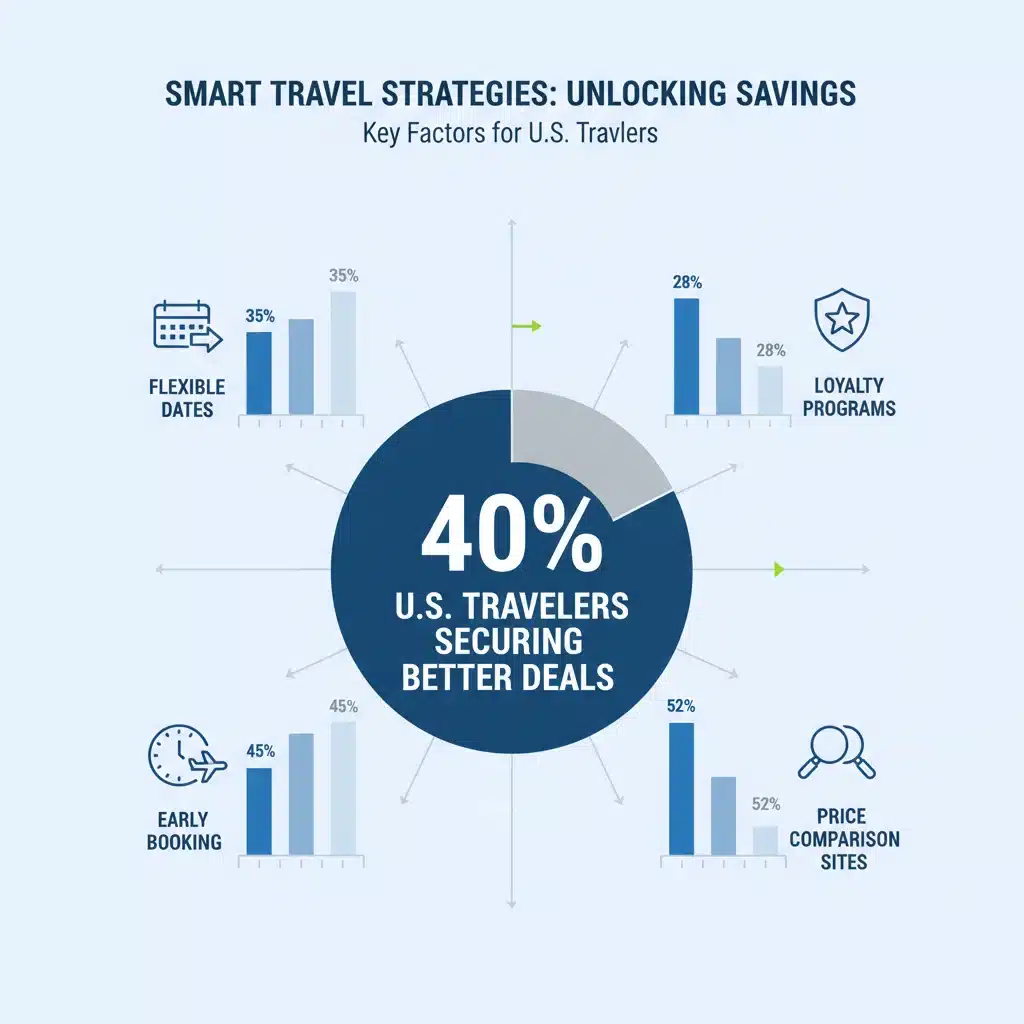
Actionable Tips for Becoming a Deal-Savvy Traveler
Inspired by the 40%? Here’s how you can join their ranks and consistently secure better accommodation deals:
- Be Flexible with Dates: If possible, adjust your travel dates by a day or two. Mid-week stays (Tuesday-Thursday) are often cheaper than weekends.
- Book in Advance, but Track Prices: For popular destinations and peak seasons, booking several months out is wise. However, continue to track prices using alerts and be prepared to rebook if a better deal emerges (if your original booking is refundable).
- Utilize Price Comparison Sites: Always check meta-search engines like Google Hotels, Kayak, Trivago, and Skyscanner to compare prices across various OTAs and direct hotel sites.
- Sign Up for Loyalty Programs: Choose one or two major hotel chains and concentrate your stays to earn points and status. The perks can be invaluable.
- Consider a Travel Rewards Credit Card: Research cards that offer generous sign-up bonuses, earning rates on travel, and annual free night certificates. Make sure to understand the annual fees and benefits.
- Clear Your Browser Cookies or Use Incognito Mode: Some booking sites may use cookies to track your searches and potentially increase prices on repeat visits.
- Look for Package Deals: Especially for longer trips or if you need flights and a car, check if bundling saves you money compared to booking components separately.
- Read Reviews and Understand Value: A ‘deal’ isn’t always the cheapest option. Read recent reviews to ensure the accommodation meets your standards for cleanliness, service, and amenities.
- Set Price Alerts: Many booking sites and apps allow you to set up alerts for specific destinations and dates, notifying you when prices drop.
- Follow Travel Deal Blogs and Newsletters: Stay informed about flash sales, error fares, and limited-time promotions from expert sources.
- Consider Alternative Accommodations: Don’t limit yourself to traditional hotels. Explore vacation rentals (e.g., Airbnb, Vrbo), hostels, or boutique guesthouses, which can sometimes offer better value, especially for longer stays or group travel.
- Leverage Off-Peak Seasons: Traveling during the ‘shoulder season’ (just before or after peak season) or even the true off-peak can lead to significant savings on both accommodations and flights, with the added benefit of fewer crowds.
- Ask for Upgrades (Politly): If you have elite status or it’s a special occasion, politely asking about upgrade availability upon check-in can sometimes yield positive results.
- Understand Cancellation Policies: Always be aware of the cancellation policy. Sometimes a slightly higher refundable rate offers peace of mind and the flexibility to rebook if a better deal appears.
- Travel with a Group: Group bookings can sometimes unlock special rates or allow you to split the cost of larger accommodations like villas or multi-bedroom suites, leading to per-person savings.
Conclusion
The travel industry in 2026 is characterized by an increasingly empowered and informed traveler. The fact that 40% of U.S. travelers are successfully securing better deals on accommodations is a testament to the power of readily available information, sophisticated technology, and a strategic mindset. These travelers are not just passive consumers; they are active participants in finding value, leveraging every tool and technique at their disposal.
For hotels and booking platforms, this trend necessitates continuous innovation, transparency, and a focus on delivering genuine value. For the aspiring traveler, it’s a clear call to action: embrace flexibility, utilize technology, and cultivate patience. By understanding and adopting the strategies outlined in this guide, you too can join the ranks of the savvy 40% and unlock more rewarding, budget-friendly travel experiences in 2026 and the years to come. Happy travels, and may your next booking be your best deal yet!