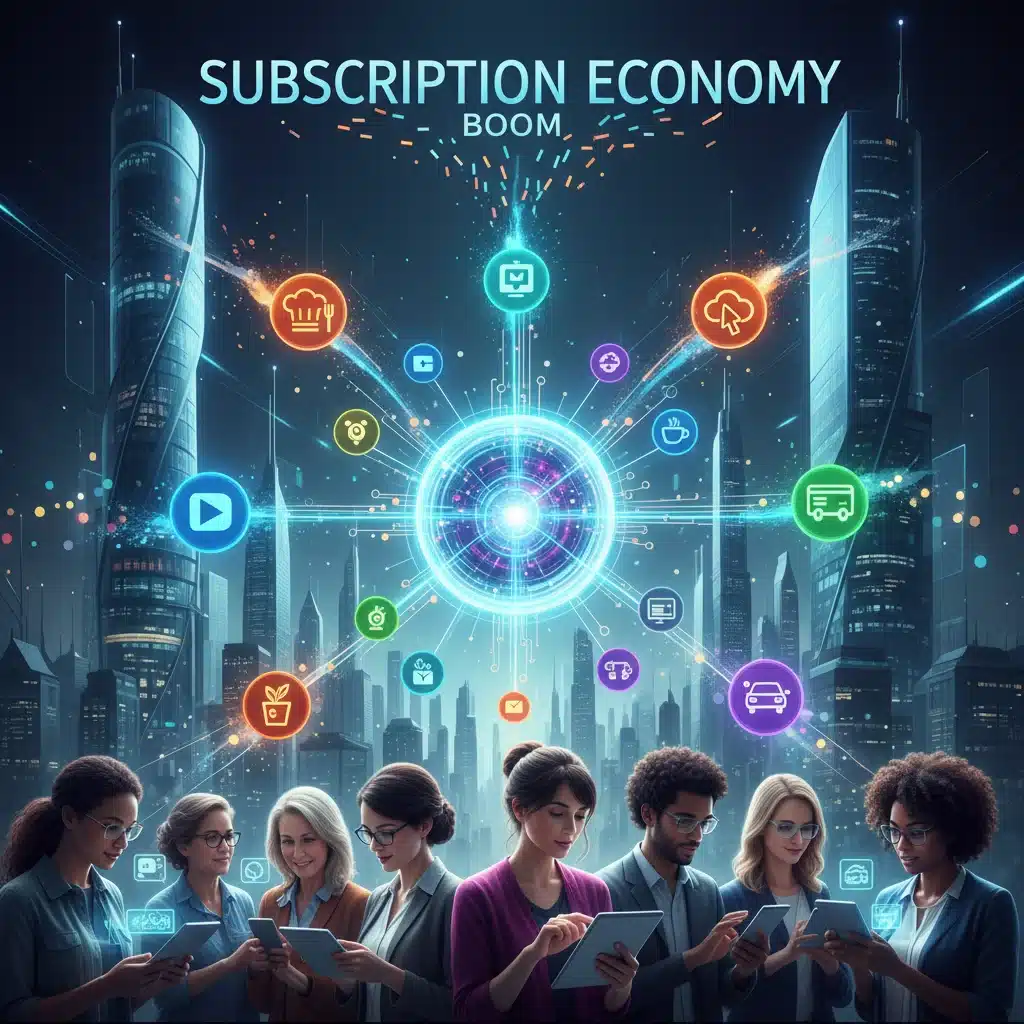
The ‘Subscription Economy’ Boom: 4 Daily Trends Revealing US Consumer Preferences in 2026
The landscape of consumer spending is undergoing a profound transformation, with the subscription economy emerging as a dominant force. What was once a niche model for magazines and gym memberships has exploded into nearly every facet of daily life, fundamentally altering how US consumers acquire goods and services. From streaming entertainment to curated meal kits, software as a service (SaaS) to personalized wellness programs, the allure of predictable payments and curated experiences has captivated millions. As we look towards 2026, understanding the key trends driving these shifts in US consumer subscriptions is not just beneficial, it’s critical for businesses aiming to thrive in this evolving market.
The shift isn’t merely about convenience; it’s about value, personalization, and a desire for frictionless access. Consumers are increasingly valuing access over ownership, preferring a continuous stream of updated content, products, or services tailored to their individual needs. This article will delve into four significant daily trends that are shaping US consumer preferences in the subscription economy, offering insights into what businesses can expect and how they can adapt to meet these demands. We’ll explore the drivers behind these trends, examine their implications, and project their trajectory into the near future, providing a comprehensive overview of the subscription landscape for 2026.
The Rise of Hyper-Personalization: Beyond Basic Customization
One of the most significant forces driving the growth in US consumer subscriptions is the insatiable demand for hyper-personalization. Gone are the days when a simple choice between ‘basic’ and ‘premium’ sufficed. Today’s consumers expect subscriptions to understand their unique preferences, anticipate their needs, and evolve with their changing lifestyles. This trend goes far beyond mere customization; it involves leveraging data, artificial intelligence (AI), and machine learning (ML) to create deeply individualized experiences that feel bespoke and intuitive.
Data-Driven Curation and AI Recommendations
At the heart of hyper-personalization is sophisticated data analysis. Subscription services are collecting vast amounts of data on user behavior, preferences, and feedback. This data is then fed into AI algorithms that can identify patterns, predict future needs, and recommend content, products, or services with uncanny accuracy. Think of streaming platforms that suggest your next binge-worthy show based on your viewing history, or music services that curate playlists perfectly attuned to your mood. By 2026, this level of predictive personalization will be a baseline expectation for any successful subscription model. Consumers will gravitate towards services that consistently surprise and delight them with relevant offerings, making their daily lives feel more effortless and enjoyable.
Dynamic Pricing and Tiered Offerings
Hyper-personalization also extends to pricing models. We’re seeing a move away from one-size-fits-all pricing towards dynamic, flexible tiers that cater to different usage patterns and budget sensitivities. This might include ‘freemium’ models that offer basic services for free, escalating to premium tiers with advanced features, or even micro-subscriptions for specific, short-term needs. Furthermore, AI-driven pricing could adjust based on individual user engagement, loyalty, or even external factors, offering personalized discounts or bundles. This flexibility makes subscriptions more accessible and appealing to a broader demographic, reinforcing the value proposition for each individual subscriber.
The ‘You-Centric’ Experience: A Competitive Edge
For businesses, embracing hyper-personalization is no longer optional; it’s a competitive imperative. Companies that can effectively leverage data to create ‘you-centric’ experiences will build stronger customer loyalty and reduce churn. This involves not just recommending products but also personalizing the entire customer journey, from onboarding to customer support. Imagine a beauty subscription box that not only sends products suited to your skin type but also provides personalized tutorials and expert advice based on your specific beauty goals. Such deep integration of personal data into the service offering creates a powerful bond with the consumer, making the subscription feel indispensable. The future of US consumer subscriptions is undoubtedly personal.
The Convenience Economy: Time-Saving Solutions as a Premium
In an increasingly fast-paced world, time has become a precious commodity. This scarcity fuels the second major trend in US consumer subscriptions: the demand for ultimate convenience. Consumers are willing to pay a premium for services that save them time, reduce cognitive load, and simplify their daily routines. This isn’t just about delivery; it’s about eliminating friction at every touchpoint and providing seamless, effortless experiences.
Automated Replenishment and Predictive Ordering
One of the most tangible manifestations of the convenience economy is the rise of automated replenishment services. Think of subscriptions for everyday essentials like pet food, coffee, or household cleaning supplies. Instead of remembering to reorder, consumers can set up a recurring delivery schedule, ensuring they never run out. By 2026, this will evolve further into predictive ordering, where smart home devices or AI-powered algorithms anticipate depletion based on usage patterns and automatically place orders, often without direct user intervention. This ‘set it and forget it’ model offers unparalleled convenience, freeing up mental space and time for other activities.

Curated Kits and Ready-to-Use Solutions
Beyond simple replenishment, consumers are also flocking to curated kits and ready-to-use solutions that eliminate decision fatigue and preparation time. Meal kit subscriptions, for instance, have surged in popularity because they provide pre-portioned ingredients and recipes, simplifying meal planning and cooking. Similarly, curated boxes for hobbies, fashion, or even self-care remove the need for extensive research and shopping. These services don’t just deliver products; they deliver a complete, ready-to-enjoy experience, saving consumers valuable time and effort. The appeal lies in the promise of instant gratification and reduced mental overhead.
Frictionless Access and On-Demand Services
The convenience economy also champions frictionless access. This means services that are available instantly, on-demand, and with minimal barriers. Think of ride-sharing subscriptions, bike-sharing programs, or even micro-mobility options that can be accessed with a few taps on a smartphone. The expectation is that services should be available exactly when and where they are needed, without lengthy sign-ups or complex procedures. For businesses, this means investing in robust digital infrastructure, intuitive user interfaces, and efficient logistics to ensure a truly seamless experience. The easier it is for consumers to access and utilize a service, the more likely they are to subscribe and remain loyal.
The Experience Economy: Subscribing to Lifestyle and Well-being
Beyond tangible goods and practical conveniences, US consumer subscriptions are increasingly catering to experiences and lifestyle enhancements. This trend reflects a broader societal shift where consumers prioritize well-being, personal growth, and memorable moments over material possessions. The subscription model is perfectly positioned to deliver ongoing, curated experiences that enrich daily life.
Wellness and Self-Improvement Subscriptions
The wellness industry has embraced subscriptions with open arms, offering everything from guided meditation apps and virtual fitness classes to personalized nutrition plans and mental health support. Consumers are seeking continuous access to tools and guidance that help them achieve their health and well-being goals. These subscriptions often provide a sense of community, expert guidance, and accountability, making the journey of self-improvement more engaging and sustainable. By 2026, expect to see even more sophisticated offerings that integrate wearable tech data, AI-driven coaching, and personalized content streams to create holistic wellness ecosystems.
Learning and Skill Development Platforms
In a rapidly changing world, continuous learning is no longer a luxury but a necessity. Subscription-based platforms offering online courses, workshops, and skill-building modules are thriving. From mastering a new language to developing professional skills or exploring a creative hobby, consumers are subscribing to access a library of knowledge and expertise. These platforms often provide flexible learning paths, interactive content, and opportunities for certification, empowering individuals to upskill or reskill at their own pace. The value proposition here is ongoing personal and professional development, delivered conveniently to one’s device.
Curated Entertainment and Cultural Experiences
While streaming services have long dominated the entertainment subscription space, the experience economy is pushing boundaries further. Beyond movies and music, consumers are subscribing to virtual reality (VR) experiences, interactive gaming platforms, and even curated cultural content like virtual museum tours or live-streamed performances. These subscriptions offer unique, immersive experiences that go beyond passive consumption, fostering engagement and a sense of connection. As technology advances, the possibilities for delivering rich, interactive cultural and entertainment experiences directly to consumers will only expand, making these subscriptions an integral part of daily leisure and enrichment.
Sustainability and Ethical Consumption: Values-Driven Subscriptions
A growing segment of US consumer subscriptions is driven by a desire for sustainability and ethical consumption. Consumers are becoming increasingly conscious of the environmental and social impact of their purchasing decisions, and they are actively seeking out brands that align with their values. The subscription model, with its potential for reduced waste and transparent supply chains, is well-suited to meet this demand.
Eco-Friendly Product Subscriptions
Subscriptions for sustainable products are gaining significant traction. This includes everything from refillable household cleaning supplies and zero-waste personal care items to ethically sourced coffee and organic produce boxes. These services often emphasize biodegradable packaging, reduced carbon footprints, and transparent sourcing practices. Consumers are attracted to the convenience of having eco-friendly alternatives delivered regularly, without the need to actively seek them out in traditional retail environments. This trend reflects a desire to make responsible choices effortlessly, integrating sustainability into daily routines.
Ethical Sourcing and Fair Trade Models
Beyond environmental concerns, ethical sourcing and fair trade practices are also powerful motivators for subscription choices. Consumers want to know that the products they receive are produced under fair labor conditions and that suppliers are treated equitably. Subscriptions that clearly communicate their commitment to these principles, often through certifications or detailed origin stories, build trust and loyalty. This transparency fosters a sense of shared values between the consumer and the brand, moving beyond a purely transactional relationship to one built on mutual respect and ethical alignment. For businesses, this means investing in ethical supply chains and effectively communicating their social responsibility initiatives.
Circular Economy Subscriptions: Rent, Repair, Reuse
The subscription model is also a natural fit for the burgeoning circular economy, which emphasizes reducing waste and maximizing resource utilization. This includes services that allow consumers to rent instead of buy items like clothing, tools, or even furniture, promoting reuse and reducing overall consumption. Repair services offered as part of a subscription, or even subscriptions for refurbished goods, also fall into this category. These models appeal to consumers who are not only environmentally conscious but also budget-savvy, as they offer access to high-quality goods without the full upfront cost and the associated environmental impact of new purchases. By 2026, expect to see a significant expansion of ‘product-as-a-service’ models across various industries, driven by both environmental imperatives and economic pragmatism.
The Future of US Consumer Subscriptions: Adapting and Thriving
The subscription economy is not a fleeting trend but a fundamental shift in consumer behavior and business models. The four trends discussed – hyper-personalization, convenience, experience, and sustainability – are not isolated but often overlap and reinforce each other. Consumers increasingly expect services that are not only personalized and convenient but also enriching and ethically sound. For businesses, this presents both challenges and immense opportunities.
Key Takeaways for Businesses
- Data is Gold: Invest heavily in data analytics and AI to understand customer preferences and deliver truly personalized experiences.
- Frictionless is Flawless: Optimize every touchpoint for maximum convenience, from signup to cancellation, ensuring a seamless user journey.
- Beyond the Product: Focus on delivering value through experiences, education, and emotional connection, not just the physical goods or basic service.
- Values Matter: Authentically integrate sustainability and ethical practices into your business model and communicate them transparently to your audience.
- Flexibility is Key: Offer diverse pricing tiers and options to cater to a broader range of consumer needs and budgets.
As we approach 2026, the competitive landscape for US consumer subscriptions will intensify. Businesses that can innovate, adapt, and genuinely connect with consumer values will be the ones to capture market share and foster long-term loyalty. The subscription economy is a dynamic ecosystem, constantly evolving in response to technological advancements and changing societal priorities. Staying attuned to these shifts and proactively responding to them will be paramount for success.
The Evolving Consumer Expectation
Consumers are becoming more sophisticated in their subscription choices. They are not just looking for a good deal; they are looking for a relationship with brands that understand them, respect their time, enrich their lives, and align with their values. The ability to switch between services with relative ease means that loyalty must be earned continuously, through consistent value delivery and an exceptional customer experience. This ongoing expectation for excellence means that subscription providers must be agile, constantly iterating, and always listening to their customer base.
Ultimately, the future of US consumer subscriptions is bright for those who embrace innovation and prioritize the customer. By understanding and responding to the powerful currents of hyper-personalization, convenience, experience, and sustainability, businesses can not only survive but thrive in this exciting and ever-expanding economic model. The journey to 2026 promises to be one of continuous evolution, offering endless possibilities for connection and value creation in the daily lives of American consumers.