Future of Remote Work: Top Trends for US Professionals in 2026
The Evolving Landscape of Remote Work: 3 Daily Trends Impacting US Professionals in 2026
The world of work is in a constant state of flux, and few areas have experienced as much rapid transformation as remote work. What began as a necessity for many during the global pandemic has evolved into a fundamental shift in how, where, and when work gets done. As we look towards 2026, the landscape of remote work in the US is poised for further significant changes. Understanding these remote work trends is not just beneficial; it’s crucial for professionals, businesses, and policymakers alike to adapt and thrive.
This comprehensive article will delve into the top three daily remote work trends that are set to profoundly impact US professionals by 2026. From the widespread adoption of sophisticated hybrid models to the ubiquitous integration of artificial intelligence and the burgeoning lifestyle of digital nomadism, we will explore the nuances of each trend, their implications, and how individuals and organizations can prepare for what lies ahead. The future of remote work is not a distant concept; it’s a present reality that continues to redefine our professional lives.
The COVID-19 pandemic acted as an unprecedented catalyst, forcing companies to embrace remote operations on a scale previously unimaginable. While the initial scramble was characterized by makeshift home offices and a steep learning curve, the subsequent years have seen a refinement of remote strategies. By 2026, the temporary fixes will have given way to deeply ingrained practices, shaped by technological advancements, evolving employee expectations, and a clearer understanding of productivity and well-being in distributed teams. These remote work trends are not merely superficial changes; they represent a fundamental re-evaluation of traditional employment paradigms.
Trend 1: The Dominance of Sophisticated Hybrid Work Models
The notion of a full return to the pre-pandemic office structure is largely a relic of the past for many industries. Instead, the hybrid model has emerged as the clear frontrunner, offering a blend of in-office collaboration and remote flexibility. However, the hybrid models of 2026 will be far more sophisticated and intentional than the ad-hoc approaches seen in earlier years. This is one of the most impactful remote work trends we anticipate.
The Evolution of Hybrid Work
Initially, hybrid work often meant a loose arrangement where employees came into the office on certain days. By 2026, we anticipate a more structured and data-driven approach. Organizations will have refined their understanding of which tasks are best performed collaboratively in person and which thrive in a remote, focused environment. This will lead to:
- Intentional Office Days: Rather than arbitrary office attendance, companies will schedule in-office days around specific team meetings, brainstorming sessions, client presentations, or company-wide events that genuinely benefit from physical presence. The office will become a hub for connection and innovation, not just a place to perform individual tasks that could be done anywhere.
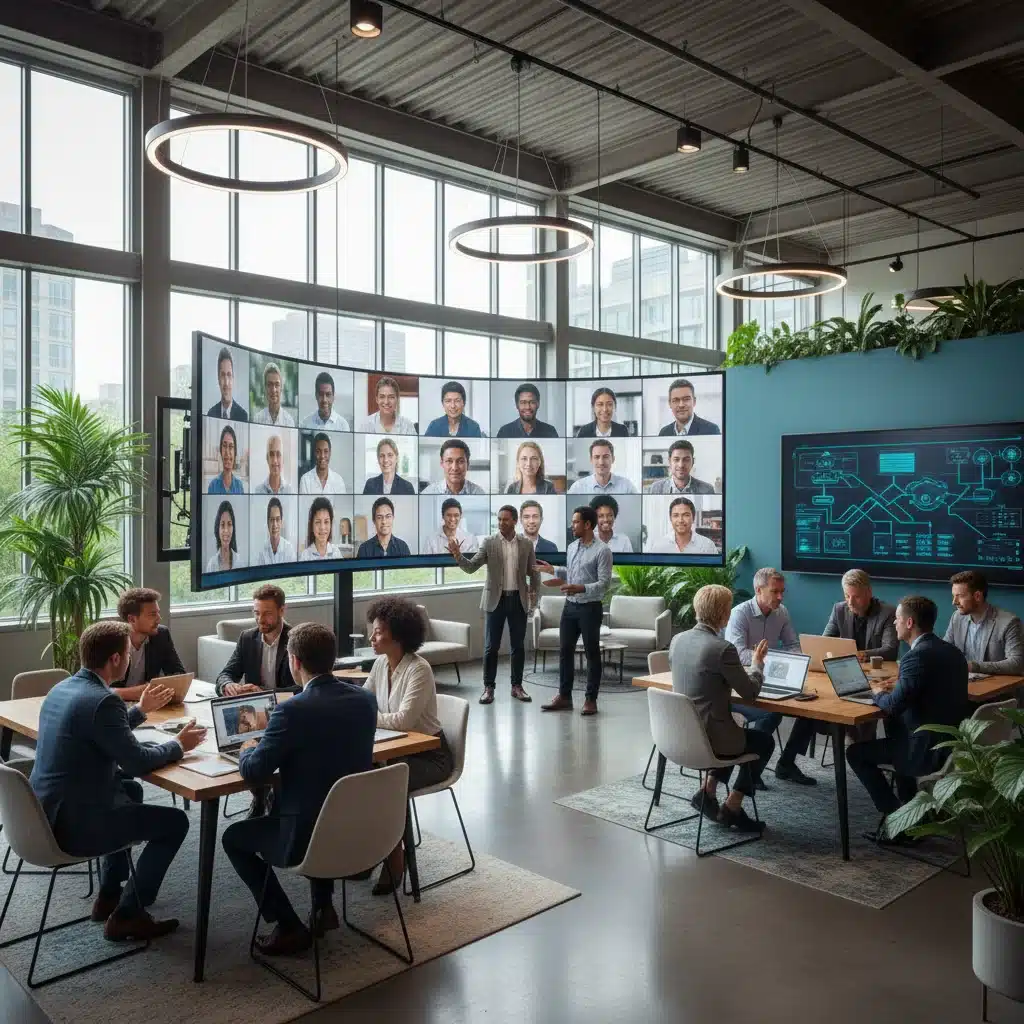
- Optimized Office Spaces: The physical office itself will transform. Expect fewer individual cubicles and more flexible hot-desking options, collaborative zones, soundproof pods for virtual meetings, and state-of-the-art technology to seamlessly connect in-person and remote participants. The design will prioritize collaboration and community building.
- Enhanced Technology for Seamless Integration: The technology stack supporting hybrid work will be more robust. Advanced video conferencing, virtual whiteboards, project management tools designed for distributed teams, and AI-powered meeting summaries will be standard. The goal is to make the experience for remote participants as engaging and equitable as for those in the office.
Impact on US Professionals
For US professionals, the dominance of sophisticated hybrid models offers both opportunities and challenges:
- Increased Flexibility and Work-Life Balance: The ability to split time between home and office provides greater autonomy, reduces commuting stress, and often leads to a better balance between professional and personal life.
- Potential for ‘Proximity Bias’: A significant challenge will be mitigating proximity bias, where in-office employees might inadvertently receive more opportunities or recognition. Companies will need robust strategies, including equitable meeting practices, transparent communication, and performance evaluation systems that focus on outcomes rather than face time.
- Need for Adaptability: Professionals will need to be adept at switching between different work environments and utilizing various collaboration tools. Strong self-management and communication skills will be paramount.
- Broader Talent Pool: For companies, hybrid models open up a wider talent pool, allowing them to recruit from across the country rather than being limited by geographical constraints. This is a key driver for these remote work trends.
The success of hybrid work hinges on clear communication, strong leadership, and a culture of trust. Organizations that master these elements will attract and retain top talent, while those that falter risk disengagement and attrition.
Trend 2: The Ubiquitous Integration of Artificial Intelligence (AI) in Daily Workflows
Artificial intelligence is no longer a futuristic concept; it’s rapidly becoming an integral part of daily work for US professionals, especially within remote and hybrid setups. By 2026, AI will be embedded in a multitude of tools and processes, fundamentally altering how tasks are performed, decisions are made, and productivity is achieved. This is one of the most transformative remote work trends on the horizon.
AI as a Productivity Enhancer
AI’s role in the remote work landscape will extend far beyond simple automation. We can expect to see:
- Intelligent Assistants and Automation: AI will take over more routine, repetitive tasks, freeing up human workers for more complex and creative endeavors. This includes scheduling meetings, drafting emails, generating reports, data entry, and even basic customer service interactions.
- Enhanced Communication and Collaboration: AI-powered tools will offer real-time translation during virtual meetings, summarize lengthy discussions, transcribe audio, and even suggest improvements to written communication. This will bridge gaps in distributed teams and improve clarity.
- Personalized Learning and Development: AI will analyze individual performance and learning styles to recommend personalized training modules and skill-building resources, ensuring professionals remain competitive and adaptable.
- Data Analysis and Insight Generation: AI will process vast amounts of data to provide actionable insights for decision-making, from sales forecasting to identifying operational inefficiencies, all accessible remotely.

The integration of AI into daily workflows is not about replacing human workers entirely, but rather augmenting their capabilities and allowing them to focus on higher-value activities. It’s about working smarter, not just harder, a crucial aspect of future remote work trends.
Impact on US Professionals
The rise of AI presents a dual impact on US professionals:
- Demand for AI Literacy and New Skills: Professionals will need to develop a foundational understanding of AI tools and how to effectively leverage them. Skills in prompt engineering, data interpretation, and critical thinking will become increasingly valuable. The ability to work alongside AI will be a core competency.
- Shift in Job Roles and Responsibilities: Some roles may be partially automated, leading to a reallocation of responsibilities or the creation of entirely new positions focused on AI oversight, development, and integration.
- Increased Efficiency and Job Satisfaction: By offloading mundane tasks, AI can lead to greater efficiency, reduced burnout, and increased job satisfaction as professionals engage in more stimulating work.
- Ethical Considerations: Professionals will also need to be aware of the ethical implications of AI, including data privacy, algorithmic bias, and the responsible use of AI tools.
Embracing AI as a partner in productivity will be key. Those who adapt to these technological remote work trends will find themselves at a significant advantage in the evolving job market.
Trend 3: The Continued Rise of the Digital Nomad Lifestyle
While hybrid work caters to those who maintain a primary residence, another significant remote work trend is the continued surge of the digital nomad lifestyle. By 2026, a substantial portion of US professionals will have adopted, or aspire to adopt, a lifestyle that allows them to work from anywhere in the world, unconstrained by geographical ties.
What Defines a Digital Nomad?
Digital nomads are professionals who leverage technology to perform their work remotely, often while traveling or living in different locations for extended periods. This isn’t just about taking a vacation; it’s about a fundamental lifestyle choice that prioritizes flexibility, cultural immersion, and personal freedom.
Drivers of Digital Nomadism
Several factors are fueling this remote work trend:
- Increased Employer Acceptance: More companies are becoming comfortable with fully remote teams, making it easier for employees to work from anywhere. The success of remote work during the pandemic has proven its viability.
- Improved Connectivity and Infrastructure: Reliable high-speed internet, co-working spaces, and digital nomad-friendly accommodations are becoming more widespread globally, making the lifestyle more accessible.
- Cost of Living Arbitrage: Many professionals seek to reduce their cost of living by moving to countries where expenses are lower, often while earning a US-level salary.
- Desire for Travel and Experience: A growing number of professionals prioritize experiences and personal growth over traditional career paths, seeing digital nomadism as a way to combine work with their passion for travel.
- Specialized Visa Programs: An increasing number of countries are offering specific digital nomad visas, simplifying the legal and logistical aspects of working abroad for extended periods.

The digital nomad movement is a powerful expression of the ultimate flexibility that remote work can offer, and it’s a remote work trend that will only grow in prominence.
Impact on US Professionals and Businesses
The rise of digital nomadism has far-reaching implications:
- Talent Attraction and Retention: Companies that embrace and support digital nomadism will have a distinct advantage in attracting top talent who value this flexibility.
- Globalized Workforce: Businesses will increasingly manage highly distributed, international teams, requiring sophisticated tools for cross-cultural communication, time zone management, and global payroll.
- Legal and Tax Complexities: Navigating the legal, tax, and compliance requirements for employees working from various international locations will become a significant challenge for businesses. Professionals themselves will need to understand the implications for their own taxes and residency.
- Community and Support Networks: The digital nomad community is growing, with dedicated co-working spaces, online forums, and events designed to support this lifestyle, offering a sense of belonging despite constant movement.
- Entrepreneurial Opportunities: Many digital nomads are freelancers or entrepreneurs, contributing to a vibrant gig economy and fostering innovation.
For US professionals considering this path, careful planning, strong self-discipline, and an adaptable mindset are essential. For businesses, it means rethinking traditional HR and operational models to accommodate a truly global and mobile workforce, navigating these remote work trends with agility.
Underlying Factors Driving These Remote Work Trends
Beyond the specific trends, several overarching factors are continuously shaping the remote work landscape:
Technological Advancements
The relentless pace of technological innovation underpins all these remote work trends. Faster internet speeds, more powerful and portable devices, cloud computing, and advanced cybersecurity solutions are making remote work not just possible but increasingly efficient and secure. The development of the metaverse and immersive virtual reality experiences could further revolutionize how remote teams interact and collaborate, creating virtual office environments that feel more present and engaging.
Changing Employee Expectations
The pandemic fundamentally altered employee expectations regarding flexibility, autonomy, and work-life balance. Professionals, particularly younger generations, are increasingly prioritizing these factors over traditional benefits or higher salaries. Companies that fail to offer flexible work options risk losing out on top talent. This shift in priorities is a powerful force driving the adoption of new remote work trends.
Focus on Well-being and Mental Health
Remote work, while offering flexibility, also brought challenges like burnout, isolation, and the blurring of work-life boundaries. By 2026, there will be an even greater emphasis on employee well-being and mental health within remote and hybrid frameworks. Companies will invest in resources, tools, and policies designed to support the holistic health of their distributed workforce, recognizing that a healthy employee is a productive employee. This includes promoting digital detoxes, offering mental health support, and fostering a culture that encourages breaks and personal time.
Sustainability and Environmental Impact
The reduction in daily commutes associated with remote and hybrid work contributes significantly to lower carbon emissions. As environmental concerns become more pressing, companies and individuals are increasingly recognizing the sustainability benefits of these remote work trends. This ecological advantage adds another layer of motivation for maintaining and evolving flexible work arrangements.
Preparing for the Future of Remote Work in 2026
To navigate these evolving remote work trends successfully, both professionals and organizations need to be proactive and strategic.
For Professionals:
- Upskill and Reskill Continuously: Focus on developing digital literacy, AI proficiency, and soft skills like communication, collaboration, adaptability, and emotional intelligence.
- Master Self-Management: Develop strong time management, organizational, and self-discipline skills to thrive in flexible environments.
- Build and Maintain Networks: Actively engage in both virtual and in-person networking to stay connected and open to new opportunities.
- Prioritize Well-being: Establish clear boundaries between work and personal life, practice self-care, and seek support when needed.
- Embrace Lifelong Learning: The pace of change demands a commitment to continuous learning and professional development.
For Organizations:
- Invest in Technology and Infrastructure: Ensure robust and secure technological solutions that support seamless remote and hybrid operations.
- Develop Clear Policies and Expectations: Establish clear guidelines for hybrid work, remote collaboration, and performance evaluation to ensure fairness and transparency.
- Foster a Culture of Trust and Communication: Build a workplace culture that empowers employees, encourages open dialogue, and supports psychological safety, regardless of location.
- Focus on Outcomes, Not Hours: Shift performance metrics from time spent to results achieved, promoting autonomy and accountability.
- Prioritize Employee Experience: Design remote and hybrid work strategies with employee well-being, engagement, and development at the forefront.
- Address Legal and Compliance Complexities: Proactively research and manage the legal, tax, and HR implications of a distributed and potentially international workforce.
Conclusion: The Dynamic Evolution of Remote Work Trends
The remote work landscape is not static; it’s a dynamic ecosystem continually shaped by technology, human behavior, and global events. By 2026, the three major remote work trends—sophisticated hybrid models, ubiquitous AI integration, and the rise of digital nomadism—will have fundamentally reshaped the professional lives of US workers. These shifts present immense opportunities for greater flexibility, efficiency, and personal fulfillment, but they also demand adaptability, new skills, and thoughtful strategic planning.
Embracing these remote work trends is not merely about staying competitive; it’s about building a resilient, innovative, and human-centric future of work. Professionals who proactively adapt and organizations that strategically invest in these evolving paradigms will be best positioned to thrive in the complex and exciting world of work in 2026 and beyond. The future is flexible, intelligent, and global, and it’s happening now.