Short-Form Video Trends: US Content Consumption 2026

The Impact of Short-Form Video: 5 Daily Trends Dominating US Content Consumption in 2026
In the rapidly evolving digital landscape, the way Americans consume content is undergoing a profound transformation. At the forefront of this shift is the undeniable rise of short-form video. Once considered a niche, it has exploded into a mainstream phenomenon, reshaping everything from marketing strategies to daily communication. As we look ahead to 2026, understanding the dominant short-form video trends is not just beneficial, but essential for anyone looking to connect with audiences in the United States. This article will delve into five pivotal trends that are not only influencing but actively dominating US content consumption, providing insights into their mechanics, impact, and future implications.
The ubiquity of smartphones and high-speed internet has paved the way for a constant stream of bite-sized entertainment and information. Platforms like TikTok, Instagram Reels, and YouTube Shorts have capitalized on our shrinking attention spans, offering endless scrolls of engaging content that can be consumed in minutes, if not seconds. This format caters to a generation that values immediacy, authenticity, and brevity. But it’s more than just quick entertainment; it’s a new language of digital interaction, a powerful tool for brand building, and a significant driver of cultural shifts. The economic and social implications of these short-form video trends are vast, affecting industries from advertising to education, and shaping how individuals learn, shop, and socialize.
The year 2026 is projected to see these trends solidify even further, with advanced AI algorithms personalizing feeds to an unprecedented degree, and content creators becoming increasingly sophisticated in their storytelling techniques within these brief formats. Businesses are recognizing that merely having a presence on these platforms isn’t enough; strategic engagement and understanding the nuances of each trend are paramount. For consumers, these trends mean more personalized content, faster access to information, and new avenues for creative expression. Let’s explore these fascinating developments in detail.
1. Hyper-Personalization Driven by AI Algorithms
One of the most significant short-form video trends dominating US content consumption in 2026 is the extreme hyper-personalization powered by advanced AI algorithms. Gone are the days of generic content feeds; today’s algorithms are incredibly sophisticated, learning individual preferences at an astonishing rate. They analyze watch time, likes, shares, comments, searches, and even the subtle pauses a user makes while scrolling, to curate a feed that feels uncannily tailored to their tastes.
This trend means that every user’s experience on platforms like TikTok and Instagram Reels is uniquely their own. If you enjoy cooking videos, your feed will be saturated with new recipes and culinary hacks. If you’re into obscure historical facts, you’ll find an endless supply of short documentaries. This level of personalization creates an incredibly sticky user experience, making it difficult for users to disengage, as the content always feels relevant and engaging.
The Mechanics of Hyper-Personalization
AI models are constantly being refined to predict user behavior with greater accuracy. They go beyond simple keyword matching, understanding context, sentiment, and even visual cues within videos. For example, an AI might learn that a user prefers videos featuring specific types of humor, or content presented by creators with a particular demographic profile. This deep understanding allows platforms to introduce users to new content and creators they are likely to enjoy, fostering discovery while maintaining relevance.
For content creators, hyper-personalization presents both a challenge and an opportunity. While it’s harder to go ‘viral’ in the traditional sense, as content is distributed to highly specific audiences, it also means that niche content can find its dedicated audience more effectively. Creators are encouraged to develop unique voices and specialized content that caters to particular interests, rather than trying to appeal to everyone.
Impact on Content Creators and Marketers
Marketers, too, must adapt. Generic advertising campaigns are becoming less effective. The focus shifts to creating highly targeted, authentic, and engaging short-form video ads that blend seamlessly into personalized feeds. Influencer marketing, particularly with micro and nano-influencers who have highly engaged niche audiences, becomes even more potent. Understanding the specific sub-communities and interests within their target demographic is crucial for brands.
Future Implications
By 2026, we can expect AI to not only personalize content but also to suggest new content creation ideas to users, or even assist in the editing process based on what’s trending and what their audience typically enjoys. The line between content consumption and content creation will blur further, driven by AI’s ability to facilitate both. This trend promises an even more immersive and individualized digital experience, solidifying short-form video’s dominance.
2. ‘Edutainment’ and Micro-Learning Explosions
Another powerful force shaping short-form video trends in the US is the massive growth of ‘edutainment’ and micro-learning. While short-form video was initially synonymous with entertainment, a significant shift has occurred towards using these platforms for quick, digestible educational content. People are increasingly turning to TikTok, Reels, and Shorts to learn new skills, understand complex topics, and stay informed, all within the span of 15 to 60 seconds.
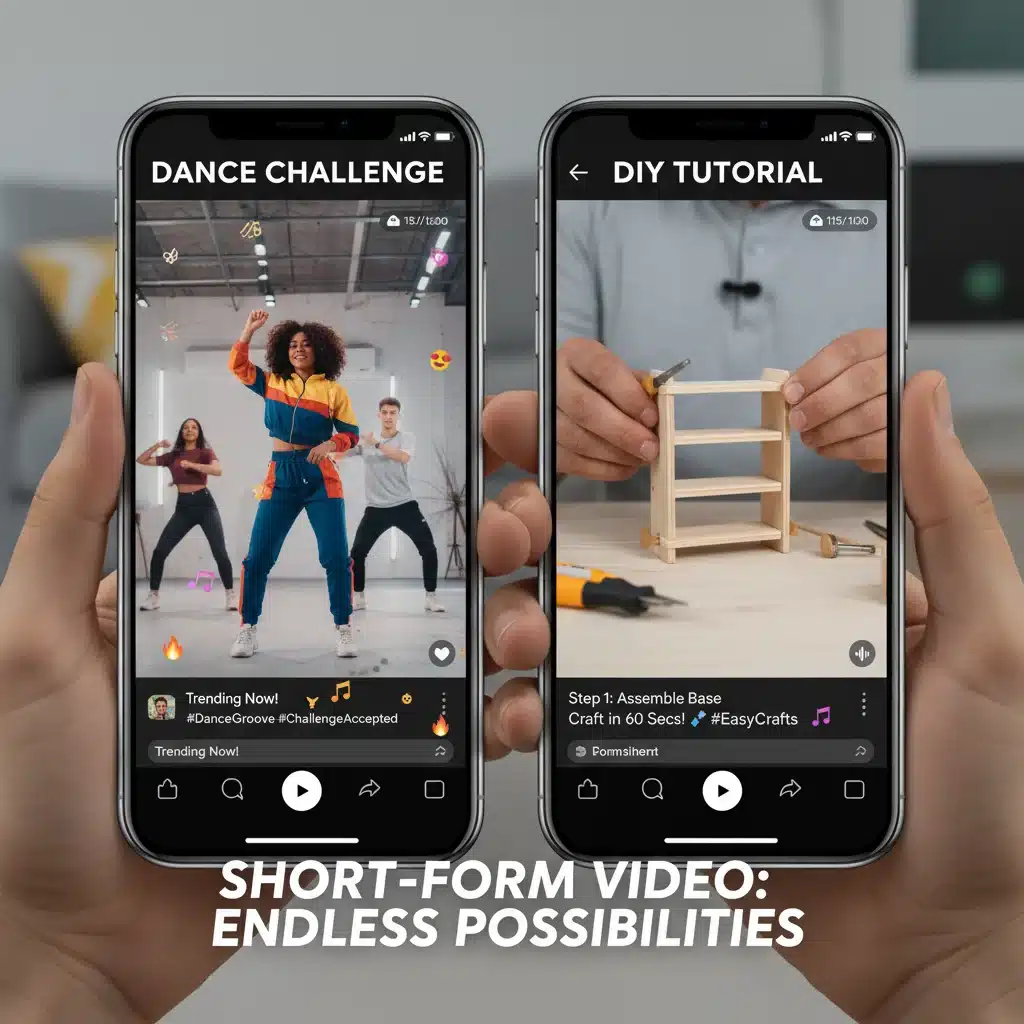
This trend is particularly prevalent among younger demographics but is rapidly expanding across all age groups. From ‘life hacks’ and DIY tutorials to quick explainers on current events, scientific concepts, or financial advice, micro-learning videos are becoming a primary source of information for many. The format’s brevity forces creators to be precise and engaging, often utilizing visual aids, captions, and fast-paced editing to convey information effectively.

The Appeal of Micro-Learning
The appeal lies in its efficiency and accessibility. In a world where time is a premium, micro-learning allows individuals to acquire knowledge without committing to lengthy courses or articles. It’s learning on demand, fitting seamlessly into short breaks, commutes, or even while waiting in line. The engaging nature of video also makes learning more enjoyable and memorable than traditional text-based formats for many.
Educators and Institutions Embrace Short-Form Video
By 2026, we are seeing a growing number of traditional educators, universities, and professional institutions integrating short-form video into their curricula and outreach strategies. Professors are creating quick summaries of lectures, historical societies are sharing bite-sized historical facts, and medical professionals are debunking health myths. This legitimization further fuels the trend, making educational content on these platforms more credible and widely accepted.
Opportunities for Brands and Experts
For brands, this trend opens up new avenues for content marketing. Instead of just advertising products, companies can establish themselves as thought leaders by providing valuable, educational content related to their industry. A software company might offer quick tutorials on productivity hacks, while a food brand could share simple recipe demonstrations. Experts in various fields can build significant personal brands by sharing their knowledge in an accessible format, fostering trust and engagement with their audience.
The ‘edutainment’ explosion signals a maturation of short-form video, proving its utility extends far beyond mere entertainment. It’s becoming a legitimate, powerful tool for knowledge dissemination and skill acquisition, fundamentally altering how Americans learn in their daily lives.
3. Rise of Interactive and Participatory Content
Interactivity is no longer a bonus; it’s a core expectation in the realm of short-form video trends. By 2026, US content consumption is heavily influenced by the rise of interactive and participatory content. Users don’t just want to passively watch; they want to be part of the experience. This trend manifests in various forms, from polls and quizzes embedded directly into videos to ‘duet’ and ‘stitch’ features that encourage direct user contribution and remixes.
Platforms are continually introducing new tools that empower creators to make their content more engaging and allow viewers to actively participate. This fosters a sense of community and co-creation, making the content feel more personal and relevant. The shift from a broadcast model to a conversational one is profound, turning viewers into active participants and sometimes even co-creators.
Forms of Interactive Content
- Polls and Quizzes: Creators use these to gauge audience opinions, test knowledge, or simply involve viewers in decision-making processes, e.g., ‘Which outfit should I wear?’
- Q&A Sessions: Live or pre-recorded sessions where creators answer viewer questions directly, often using text overlays or short video responses.
- Duets and Stitches: Unique to platforms like TikTok, these features allow users to directly integrate parts of another user’s video into their own, creating remixes, reactions, or collaborative storytelling.
- Augmented Reality (AR) Filters and Effects: User-generated content often leverages AR filters, allowing viewers to experiment with virtual try-ons, games, or creative effects, further blurring the lines between creator and consumer.
- Challenges and Trends: The very nature of viral challenges (e.g., dance challenges, transformation challenges) is inherently participatory, inviting millions to replicate and personalize content.
Building Community and Engagement
This trend is crucial for building strong, engaged communities around creators and brands. When users feel their input is valued and they can directly influence or contribute to content, their loyalty and engagement skyrocket. It transforms content consumption from a solitary activity into a shared, dynamic experience. For brands, interactive content is a goldmine for market research and direct consumer feedback, offering insights that traditional methods often miss.
The Future of Participation
Expect to see even more sophisticated interactive elements by 2026, possibly including AI-generated personalized interactive narratives or even direct integration with gaming elements. The goal is to make content consumption an active, rather than passive, endeavor, ensuring that short-form video trends remain at the cutting edge of digital engagement.
4. Authenticity and ‘Raw’ Content Prevail
In an increasingly polished and curated digital world, the pendulum has swung towards authenticity, making ‘raw’ and unscripted content a dominant force among short-form video trends in 2026. Consumers, especially younger demographics, are fatigued by overly produced, aspirational content that feels unattainable or disingenuous. They crave realness, relatability, and transparency from creators and brands alike.
This trend emphasizes content that looks less like a high-budget production and more like a spontaneous moment captured on a smartphone. It includes ‘day-in-the-life’ videos, unfiltered reactions, candid discussions, and content that embraces imperfections. The focus is on connection and relatability over perfection, fostering a sense of trust and genuine engagement.
Why Authenticity Resonates
The appeal of raw content lies in its ability to break down the perceived barrier between creator and audience. When creators share their genuine experiences, struggles, and unvarnished opinions, viewers feel a stronger connection. It humanizes brands and individuals, making them more approachable and trustworthy. This is particularly powerful in an era where skepticism towards traditional advertising is high.
Impact on Content Creation
For creators, this means less pressure to have expensive equipment or elaborate sets. A smartphone and a genuine message are often enough. The emphasis shifts to compelling storytelling and personality. Creators who are comfortable being themselves, sharing their true passions and perspectives, are often the most successful in this environment.
Brands Embracing Rawness
Brands are also learning to adapt by incorporating more user-generated content (UGC), behind-the-scenes glimpses, and collaborating with influencers who embody authenticity. Instead of highly polished ad campaigns, they might opt for relatable testimonials or creators demonstrating products in real-life, unscripted scenarios. This approach not only builds trust but also often proves more cost-effective and generates higher engagement rates.
By 2026, authenticity will continue to be a cornerstone of effective short-form video strategy. Brands and creators who master the art of being ‘real’ will be the ones who forge the deepest connections with their audiences, proving that sometimes, less polish means more impact.
5. Niche Communities and Hyper-Specific Content
The final, yet equally significant, trend among short-form video trends dominating US content consumption in 2026 is the proliferation of niche communities and hyper-specific content. As platforms become more sophisticated in their personalization, users are increasingly gravitating towards content that caters to their very specific interests, no matter how obscure. This has led to the flourishing of countless niche communities, each with its own language, inside jokes, and dedicated creators.
From ‘BookTok’ (books) and ‘CleanTok’ (cleaning tips) to specialized communities for specific hobbies like urban gardening, vintage fashion collecting, or complex coding challenges, there’s a short-form video community for almost everything. These communities offer a sense of belonging and provide a platform for individuals to connect with others who share their unique passions.
The Power of Niche
The power of niche communities lies in their high engagement and strong sense of identity. Members are often highly passionate and invested in the content, leading to deeper interactions, more user-generated content, and stronger word-of-mouth promotion. For creators, tapping into a niche means a dedicated, loyal audience that is eager for their specific content.
Monetization and Brand Opportunities
For businesses, understanding and engaging with these niche communities is paramount. Instead of broad campaigns, brands can tailor their messaging and products to resonate with hyper-specific interests. For example, a sustainable clothing brand might find immense success by collaborating with ‘EcoTok’ creators, while a specialized tech gadget might thrive by targeting ‘TechTok’ enthusiasts. This allows for highly efficient marketing spend and often results in higher conversion rates due to the direct relevance of the content to the audience’s interests.
Monetization for creators within these niches is also becoming more sophisticated, moving beyond simple ad revenue to include direct fan support, exclusive content, and collaborations with brands that authentically align with their community’s values. By 2026, the fragmentation of content consumption into these hyper-specific niches will continue to define how audiences connect with content and commerce, making it a critical area for strategic focus.
Conclusion: Navigating the Short-Form Video Future
The landscape of US content consumption is undeniably shaped by short-form video trends, and by 2026, these trends will have solidified their dominance. Hyper-personalization, the explosion of edutainment, the demand for interactive experiences, the embrace of authenticity, and the flourishing of niche communities are not just fleeting fads; they represent fundamental shifts in how we consume, create, and interact with digital media.
For businesses, marketers, and content creators, staying abreast of these developments is crucial. Success in this environment hinges on more than just producing video; it requires a deep understanding of audience psychology, algorithmic mechanics, and the cultural nuances of each trend. Adapting strategies to prioritize genuine engagement, value-driven content, and community building will be key to thriving in this dynamic ecosystem.
Consumers, on the other hand, can look forward to an even richer, more personalized, and more engaging content experience. The future of short-form video promises continued innovation, making our daily digital lives more informative, entertaining, and connected than ever before. As we move further into the decade, the agility to adapt and innovate within these short-form video trends will define the leaders of the digital age.