Unseen Journeys: The Overlooked Realities of Modern Travel
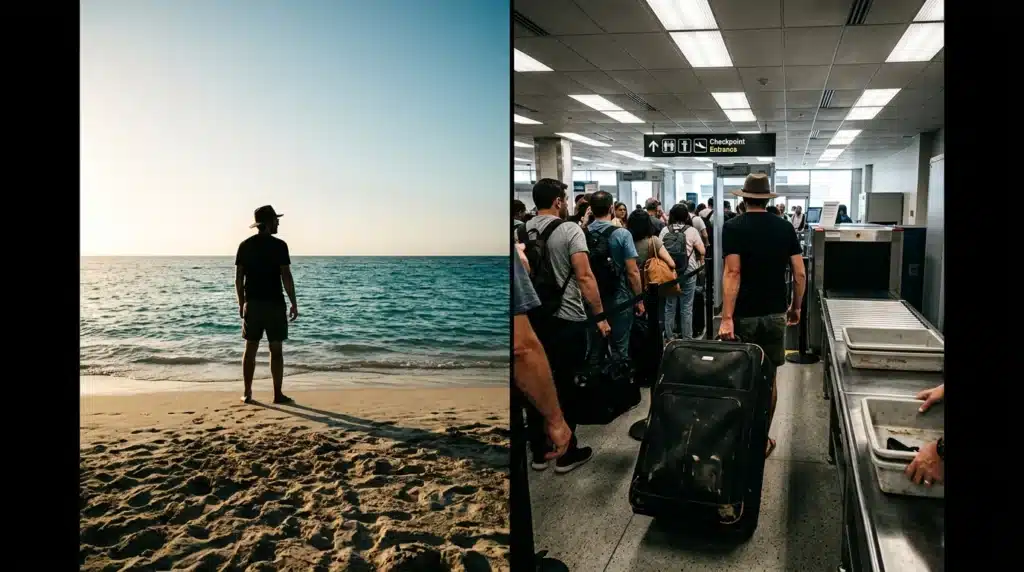
We book flights chasing an escape, a perfect moment captured against a golden sunset, free from the clutter of daily life. The images we scroll through promise serene beaches, empty monuments, and flawless culinary experiences. This curated vision of travel has become a powerful motivator, shaping our expectations and defining what a successful trip should look like.
A significant gap often exists between this polished narrative and the messy, unpredictable reality of the journey. Beyond the frame of the perfect photo lie the hidden stressors: the unexpected financial burdens of resort fees and currency exchange traps, the physiological toll of jet lag that disrupts more than just sleep, and the complex social footprint we leave on the communities we visit. These overlooked elements are not minor inconveniences; they are underlying parts of the modern travel experience that directly impact our well-being and the authenticity of our adventures.
This article moves beyond the postcard to deconstruct the myths of effortless travel. We will unpack the true financial costs that hide in the fine print, explore the silent impact of travel on our mental and physical health, and examine the real meaning of sustainability in a world grappling with overtourism. By understanding these unseen journeys, you can equip yourself with the knowledge to navigate the challenges and cultivate a more mindful, rewarding, and realistic approach to exploring the world.
Beyond the Postcard: Deconstructing the ‘Perfect’ Travel Narrative
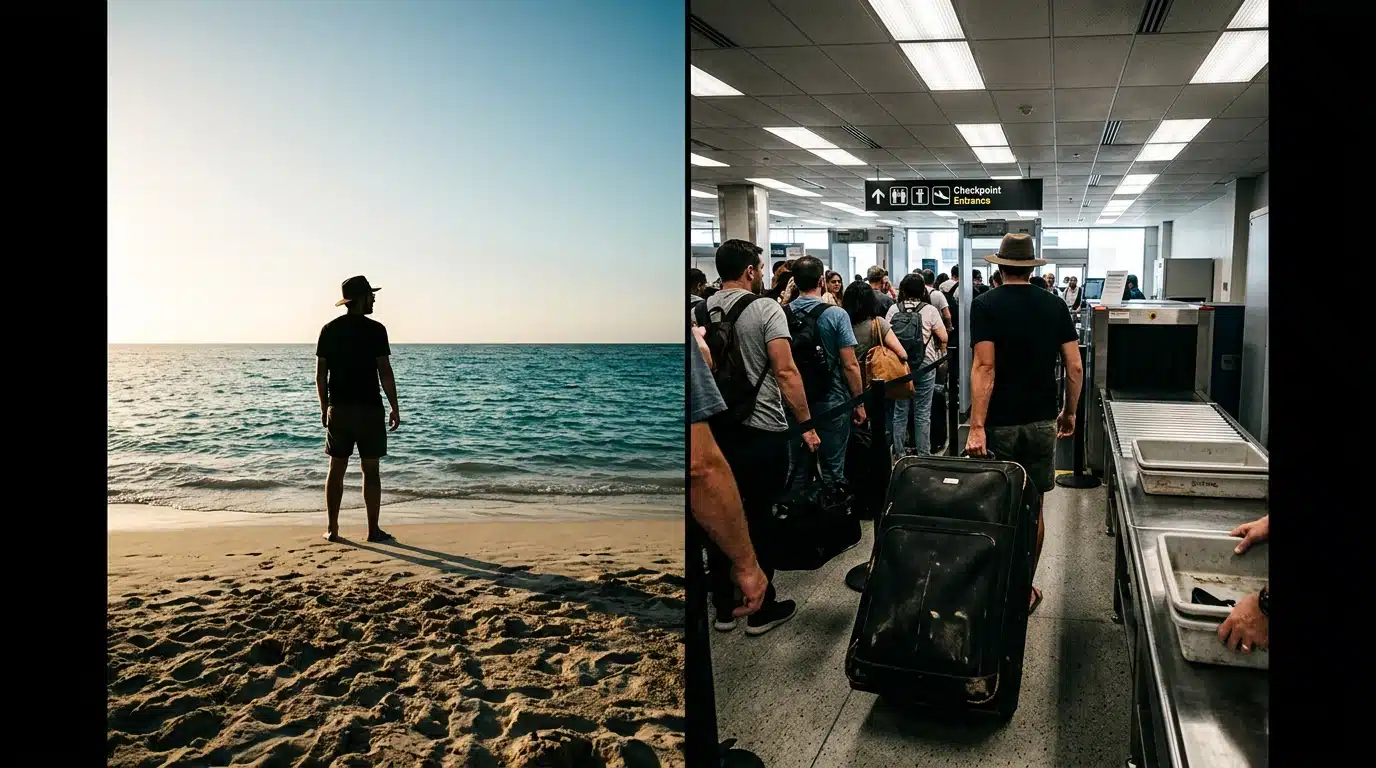
The travel photos flooding our social media feeds often tell a very specific story: empty beaches, serene sunsets, and flawless meals. What these images conveniently omit are the delayed flights, the tourist crowds just out of frame, and the surprisingly mediocre food. This curated highlight reel creates a significant gap between travel expectations and the often messy, unpredictable travel reality. It’s a performance.
This disconnect is more than just a feeling. A study from the Cornell School of Hotel Administration found that nearly 40% of travelers report feeling some level of disappointment when their trip doesn’t align with the polished version they saw online. The constant exposure to perfectly crafted itineraries sets an impossibly high bar. But what happens when the reality of a crowded museum doesn’t match the serene, empty photo we were promised? It can feel like a personal failure, one of the more subtle wellness pitfalls in modern life.
The underrated factor here is the sheer effort behind creating the illusion of effortless perfection. That casual-looking shot at a cafe likely took twenty takes, and the “secluded” waterfall was probably shared with fifty other people waiting their turn. Understanding these social media travel narratives is a core part of grasping broader perspectives on daily trends for well-being. It’s like watching a movie trailer — you’re only seeing the most exciting two minutes of a two-hour film.
Ultimately, this curated perfection shapes not just our desires but our memories, pressuring us to find authentic experiences that match an inauthentic standard.
The Silent Impact: How Travel Shapes Our Mental & Physical Wellness
Beyond the curated feeds and highlight reels, every trip exerts a quiet pressure on our bodies and minds. We often focus on the destination, overlooking the journey’s profound effects on our well-being. The reality is that travel is a complex mix of stress and stimulation, pushing our internal systems in ways we rarely acknowledge. It’s a physiological event, not just a geographical one.
Understanding this duality is the first step toward healthier, more rewarding adventures. The data suggests—though not conclusively—that the perceived benefits of a vacation can be significantly diminished by unmanaged travel stressors. This is where many travelers get tripped up.
Navigating Jet Lag’s Deeper Effects
Most people think of jet lag as simple tiredness, a minor inconvenience to be pushed through with coffee. What most people miss is its systemic impact. A study from the Division of Sleep Medicine at Harvard Medical School found that severe circadian disruption can impair cognitive function by up to 15% for several days after arrival. Your body’s internal clock is more like a sensitive analog watch than a digital one; you can’t just reset it without causing some internal gears to grind.
This disruption goes beyond grogginess, affecting everything from hormone regulation and digestion to mood stability. Suddenly, that minor disagreement over a dinner spot can feel like a major conflict. Why does this happen? Your body is essentially battling a physiological mismatch between its internal schedule and the external environment, a conflict that consumes significant energy and resources.
The Double-Edged Sword: Travel & Mental Well-being
The anticipation of a trip can be a powerful mood booster, yet the logistics can trigger significant anxiety. From navigating packed airports to overcoming language barriers, travel forces us out of our comfort zones. This can be both a source of stress and a catalyst for growth. The key is finding a balance between challenging and overwhelming yourself, a concept explored in many expert perspectives on daily well-being.
Dr. Amelia Vance, a clinical psychologist specializing in travel-related anxiety, explains that “novel experiences are key for building new neural pathways, but an overload of new stimuli can trigger the body’s fight-or-flight response.” Pre-trip anxiety, surprisingly, affects an estimated 43% of international travelers, according to the International Travel Health Journal. This creates a strange paradox where the very thing meant to relieve stress becomes a source of it (a classic trap for those new to journeying — something a beginner’s guide to travel often addresses).
Yet, successfully navigating these challenges builds resilience and self-confidence. The exposure to different cultures and ways of life can broaden our perspective, fostering empathy and reducing mental rigidity. The trick is to prepare for the friction, not just the fun.
The most significant unforced error travelers make is exchanging large sums of cash at airport kiosks.
— Dr. Miles Bennett, Consumer Finance Expert, University of Chicago
| The Illusion | The Reality |
|---|---|
| Effortless Perfection on Social Media | Highly curated moments hiding crowds, effort, and occasional disappointment. |
| The Advertised Trip Price | A base cost often inflated by hidden resort fees, airline charges, and poor exchange rates. |
| A Purely Relaxing Escape | A mix of stimulation and stress, including jet lag, travel anxiety, and sensory overload. |
| Simple ‘Green’ Choices | Complex systems of tourism leakage, overtourism, and questionable carbon offsets. |
Unpacking the True Cost: Hidden Fees and Unexpected Expenses
The sticker price of a vacation is rarely the final price. While we budget for flights and hotels, a swarm of hidden fees and unexpected expenses can quickly inflate the total cost, turning a relaxing getaway into a source of financial stress. These additional charges are often buried in fine print or presented at the last minute, making them difficult to anticipate. It’s like buying a concert ticket only to find out you have to pay extra for the seat itself.
Understanding these costs is the first step toward protecting your travel budget. Many travelers return home shocked at their credit card statements. The data suggests this is a widespread issue; a Consumer Reports study found that 64% of travelers have encountered at least one unexpected fee on their trips.
The Stealthy Surcharges: Beyond the Ticket Price
Hotels have become particularly adept at adding mandatory charges that aren’t included in the advertised nightly rate. The most common is the resort fee, a daily surcharge that supposedly covers amenities like Wi-Fi, pool access, or the fitness center — things many guests assume are included. A hotel in Miami might advertise a rate of $220 per night, only to add a $45 daily resort fee plus tax at checkout, increasing the real cost by over 20%.
These fees are not just limited to resorts. Urban hotels often label them as “destination fees” or “urban amenity fees.” What most people miss is that these charges are applied regardless of whether you use the amenities. This practice has become a significant revenue stream for the hospitality industry, making it vital to read the full booking details before committing.
Airline Ancillary Fees: A Closer Look
Budget airlines pioneered the model of unbundling services, and now most major carriers have followed suit. That low base fare is often just a starting point. Ancillary fees for services that were once standard can dramatically increase the cost of a flight, a notable point for anyone following a beginner’s guide to fluid travel adventures.
The accumulation of these small charges can be surprising. A seemingly affordable $250 round-trip ticket can easily balloon once you add necessary extras. Let’s look at a common scenario:
- Advertised Base Fare: $250
- Seat Selection: $28 each way ($56 total)
- Carry-On Bag: $45 each way ($90 total)
- First Checked Bag: $35 each way ($70 total)
- Total Ancillary Fees: $216
- True Flight Cost: $466
Suddenly, the “deal” has nearly doubled in price. Planning for these costs is a key part of navigating the complexities of modern travel and staying on budget.
Local Traps: Avoiding Tourist Price Gouging
Once you arrive at your destination, a new set of potential financial pitfalls emerges. Tourist-heavy areas are often filled with businesses that charge inflated prices for goods and services. A restaurant with a stunning view might have a separate, pricier “tourist menu,” or a taxi driver might take a suspiciously long route from the airport. But how do you spot these traps before it’s too late?
One of the easiest ways to avoid this is to walk a few blocks away from major attractions. That cappuccino with a view of the Eiffel Tower might cost €12, while a more authentic and tastier one at a local cafe just a five-minute walk away could be €3. Observing where locals eat and shop provides valuable clues — an important strategy for avoiding common travel pitfalls.
Currency Exchange: The Hidden Percentage
Exchanging money is another area where travelers often lose out. Airport currency exchange kiosks and hotel front desks typically offer the worst rates. They make their profit on the spread, which is the difference between the rate at which they buy and sell a currency. This spread can effectively act as a hidden fee of 5-10% or even more.
According to Dr. Miles Bennett, a consumer finance expert at the University of Chicago, “The most significant unforced error travelers make is exchanging large sums of cash at airport kiosks.” For example, if the mid-market exchange rate is 1 USD to 0.92 EUR, an airport counter might offer you a rate of 1 USD to 0.84 EUR. On a $1,000 transaction, that’s an immediate loss of €80. Using a credit card with no foreign transaction fees or withdrawing local currency from a bank ATM upon arrival almost always offers a more favorable rate.
The Unseen Footprint: Understanding Sustainable Travel’s Realities
The term “sustainable travel” is everywhere, often presented as a simple choice between a green-labeled hotel and a standard one. But what most people miss is the complicated reality behind that label. True sustainability in travel goes far beyond reusing towels or carrying a metal straw; it involves a deep, and sometimes uncomfortable, look at the economic, social, and environmental systems our journeys interact with.
Beyond the ‘Green’ Label: True Sustainability Metrics
Many well-intentioned travelers are guided by certifications that, unfortunately, can sometimes amount to little more than clever marketing. The underrated factor here is a concept called tourism leakage. It’s a quiet drain where the money you spend flows out of the local economy and back to international corporations. A staggering report from the UN Environment Programme found that in some developing nations, as little as $5 out of every $100 spent by a tourist actually stays within the host community.
This changes everything. Suddenly, the question isn’t just about the hotel’s recycling policy, but about who owns it. Does it employ local managers? Does it source its food from nearby farms? These are the metrics that matter, measuring the real-world benefits against the resource strain of water consumption and waste management that each visitor creates. It’s a complex balance that requires looking past the easy answers and understanding the data behind our lifestyle choices.
The Carbon Offset Conundrum
Then there’s the issue of carbon offsetting, the practice of paying to fund a project that reduces greenhouse gas emissions to “balance out” the emissions from your flight. It feels like a neat solution, doesn’t it? On the surface, it’s like spilling a drink and then paying someone to mop up a similar-sized spill elsewhere. The problem is, proving the mop-up actually happened—and wouldn’t have happened anyway—is notoriously difficult.
Some critics argue that many offset programs support projects that were already financially viable, meaning your contribution doesn’t create new carbon savings. It’s a murky area that can provide a false sense of environmental absolution. While some projects are legitimate, offsets should be seen as a last resort, not a free pass to fly without consideration.
Overtourism’s Invisible Scars on Local Communities
Perhaps the most visible side effect of modern travel is overtourism, where the sheer volume of visitors degrades the quality of life for residents and the experience for tourists themselves. Venice is the classic case study. The city, with a resident population that has fallen below 50,000, grapples with an estimated 20 million visitors each year. This influx has transformed historic neighborhoods into what are essentially museum exhibits, pushing out local bakeries and butcher shops in favor of souvenir stands.
This is not an isolated problem. In Barcelona, resident protests have erupted over the explosion of short-term rentals that drive up housing costs, making the city unaffordable for the people who call it home. These situations reveal the hidden social cost of our travels, a key aspect of navigating modern living trends that impact communities globally.
Supporting Authenticity: Identifying Genuine Local Businesses
So, how can you direct your money toward authentic local enterprises? It requires a bit more effort than just picking the first restaurant you see. Look for businesses that locals themselves frequent — a good sign is a menu primarily in the local language or a location slightly off the main tourist drag. Family-run guesthouses and artisan shops that showcase unique crafts are often better choices than large, generic chains.
It’s about being an observant traveler. Choosing to eat at a small, family-owned trattoria over an international fast-food chain is a direct investment in that family and their community. These small decisions, when made collectively, help preserve the cultural fabric that makes a destination worth visiting in the first place. You can find more expert perspectives on making mindful choices that align with your values.
The goal isn’t to induce travel guilt but to foster a deeper awareness. Every trip has an impact, and understanding its true nature is the first step toward ensuring that impact is a positive one for the places we are so fortunate to explore.
Mastering the Art of the Unexpected: Practical Tips for Savvy Explorers
While considering the global impact of our travels is vital, the journey’s personal mechanics often present their own set of challenges. The truth is, no amount of planning can eliminate every variable. A recent study from Battleface, a travel insurance provider, revealed that flight disruptions were the top concern for 73% of American travelers. The unexpected is not a possibility; it’s a certainty. Preparing for it is what separates a stressful trip from a memorable adventure.
The key is shifting from trying to control everything to building a resilient travel framework. This is about practical preparedness, not paranoid over-planning.
Your Pre-Trip Reality Check Checklist
Before you even pack your bags, running through a few often-overlooked details can save you from major headaches down the road. This isn’t just about remembering your passport. It’s about creating a safety net for the things that can—and do—go wrong.
- Scrutinize Your Insurance: Don’t just buy the cheapest travel insurance. Read the fine print. Does it cover medical evacuation? What are the exclusions for “adventure activities”? A policy that costs $50 more but covers a helicopter rescue from a remote hiking trail is a wise investment, especially when you consider that such services can cost upwards of $25,000.
- Create a Digital Defense: Traveling makes you a prime target for cybercriminals. Before you leave, install a reputable VPN on your phone and laptop to protect your data on public Wi-Fi. Download offline maps for your destination—a lifesaver when you have no signal—and store digital copies of your passport and visas in a secure, encrypted cloud service. Understanding how to navigate these aspects of modern living is no longer optional.
- Research Local Nuances: Go beyond learning how to say “thank you.” What is the local tipping culture? Are there specific dress codes for religious sites you plan to visit? In some parts of Southeast Asia, for example, showing the soles of your feet is considered deeply disrespectful. Small bits of cultural homework prevent embarrassing and potentially offensive missteps.
- Diversify Your Money: Never rely on a single source of funds. Carry at least two different credit cards, a debit card, and a small amount of local currency. Inform your banks of your travel dates to avoid having your cards frozen for suspicious activity—an infuriatingly common problem.
Embracing Flexibility: The Traveler’s Superpower
A checklist provides structure, but your greatest asset on the road is a flexible mindset. A travel itinerary is much like a recipe; it’s an excellent guide, but a great cook knows when to substitute ingredients based on what’s fresh at the market. When a train is canceled or a museum is unexpectedly closed, what do you do? Panic, or see an opening for something new?
This is where the real magic of travel happens. That canceled ferry might lead you to discover a small, family-run restaurant you would have otherwise missed. The underrated factor here is how you react. Seeing disruptions as opportunities rather than disasters is a skill, and it’s one that completely changes the quality of your experience. It’s a core component of any good beginner’s guide to travel.
Adopting this approach has tangible benefits for your well-being. Dr. Alia Crum of the Stanford Mind & Body Lab has shown that stress is not inherently bad; it’s our response to it that matters. By reframing a missed connection as a chance to explore, you actively reduce travel anxiety and improve your mental resilience. This mindset aligns directly with the science of everyday wellness, turning a potential negative into a positive outcome.
Ultimately, a well-prepared traveler carries both a plan and the wisdom to abandon it when a better story presents itself.
The Evolution of Wanderlust: Future Trends Shaping Travel’s Hidden Depths
The very definition of travel is changing. Instead of a frantic rush to check landmarks off a list, a clear preference for deeper, more meaningful engagement is emerging. The rise of slow travel aligns with broader shifts in modern living, where the quality of an experience outweighs the quantity of sights seen. It’s a basic move away from consumption toward connection.
Fueling this is the expansion of the digital nomad lifestyle. When your office is a laptop, any city can become a temporary home, creating a new type of resident. This trend, has complex effects. According to travel analyst firm Skift, areas popular with remote workers saw an average 14% increase in short-term rental costs, impacting local housing affordability. The data suggests this is a complicated new reality for many communities.
This desire for authenticity is also reshaping cultural exchanges. Tourists are increasingly seeking experiences that go beyond a performance for visitors, instead looking for genuine interaction. But what does true immersion even look like? It often means participating in local daily life, from cooking classes in a family home to volunteering on a community project. This focus on genuine connection and personal growth ties directly into the science of everyday wellness.
Ultimately, these emerging travel trends point toward a future where a journey’s success is measured by personal transformation, not passport stamps. The focus is becoming less about where you went and more about who you became while you were there.
Redefining the Souvenir: From Photos to Perspective
As we navigate the complexities of modern travel, perhaps the goal needs to shift. Instead of collecting destinations like stamps in a passport, what if we focused on collecting perspectives? The pressure to document a perfect trip often robs us of the ability to experience it. By letting go of the curated narrative, we open ourselves up to the unpredictable, inconvenient, and genuinely transformative moments that rarely make it to the social media feed. The most valuable souvenir isn’t a flawless photo, but a broadened viewpoint. The next time you plan an adventure, consider asking not just ‘Where will this trip take me?’ but ‘Who might I become when I get there?’
Frequently Asked Questions
What are common hidden costs in international travel?
Common hidden costs include mandatory hotel “resort fees,” airline ancillary charges for seats and bags, and unfavorable currency exchange rates at airports. These can significantly inflate your trip’s total price if not anticipated in your budget.
How can I prepare for unexpected travel situations?
Prepare by building a flexible mindset and budgeting for unexpected expenses. Research common travel stressors like jet lag and airport navigation to reduce anxiety, and always have a digital or physical backup of key documents and reservations.
What is the real impact of social media on travel expectations?
Social media creates a significant gap between curated, perfect online images and real-life travel experiences. This often leads to disappointment and a feeling of pressure to capture flawless moments rather than genuinely enjoying the destination.
How does travel affect mental and physical well-being?
Travel presents a duality for well-being. While it offers mental growth and new perspectives, it can also cause significant stress from jet lag, anxiety, and navigating unfamiliar environments, impacting both your mental and physical health.
What are practical steps for more sustainable travel?
Go beyond simple “green” labels by supporting locally-owned businesses to prevent “tourism leakage.” Choose destinations that are not suffering from overtourism and invest your money directly into the community you are visiting through local guides, restaurants, and artisans.