
Unpacking the Latest Viral Meme: Why ‘Couch Guy’ is Everywhere and What it Means for Online Culture in 2026
In the ever-evolving landscape of the internet, viral phenomena emerge with dizzying speed, capturing collective attention and sparking widespread discussion. Among the most prominent and pervasive of these in 2026 is undoubtedly the Couch Guy Meme. What started as an innocuous snippet of a social media video has exploded into a global sensation, permeating every corner of digital culture and becoming a benchmark for understanding contemporary online trends. This article delves deep into the origins, rapid dissemination, and profound implications of the Couch Guy Meme, exploring why it resonates so strongly with internet users and what its ubiquity tells us about the state of online culture today.
The Genesis of a Phenomenon: How the Couch Guy Meme Began
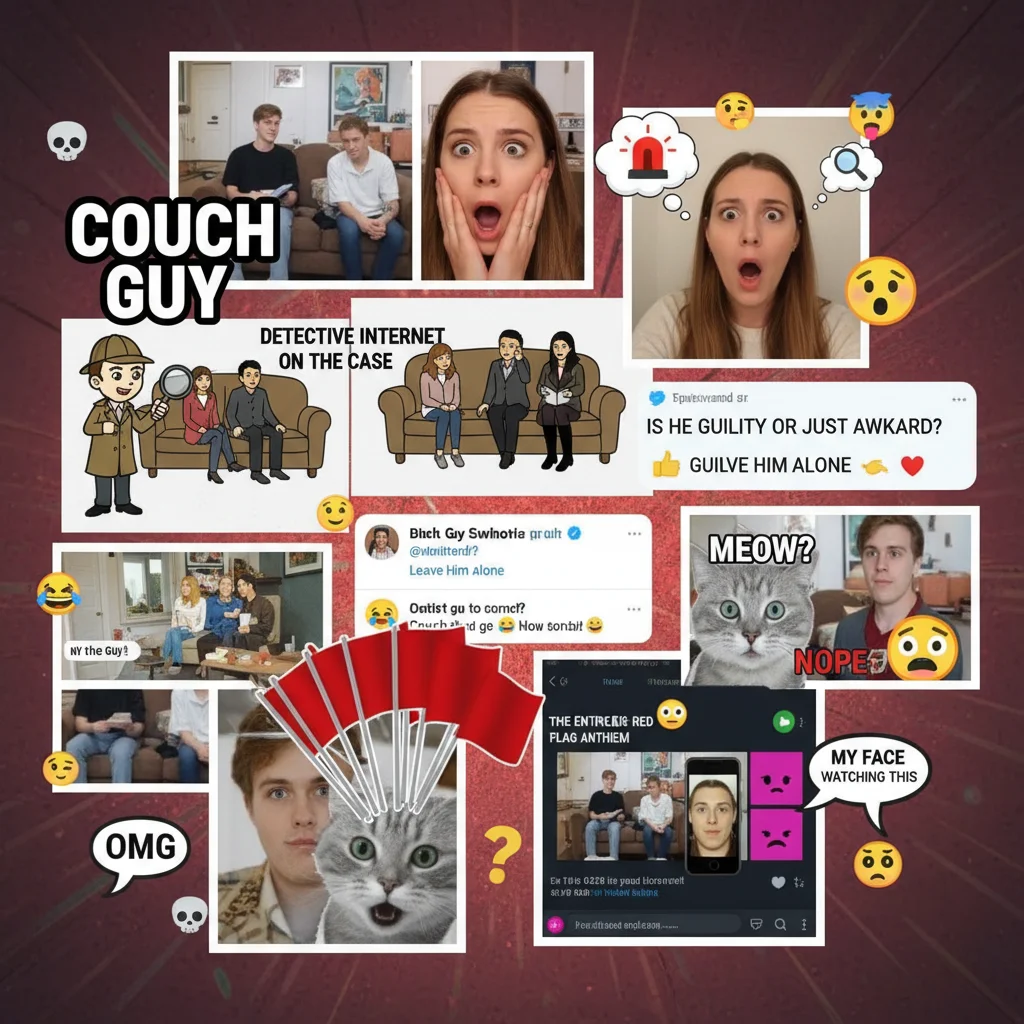
Every viral sensation has a starting point, and for the Couch Guy Meme, it was a seemingly ordinary moment captured on video. The original clip, which first surfaced on a popular short-form video platform in early 2026, depicted a young woman surprising her boyfriend, the now-infamous ‘Couch Guy,’ at a party. While the initial intent of the video was likely a heartwarming reveal, internet sleuths and casual observers alike quickly picked up on subtle cues and body language that suggested a more complex, perhaps even awkward, dynamic. The ‘Couch Guy’s’ reaction, his posture, and the reactions of those around him became instant fodder for analysis, dissection, and, ultimately, widespread memeification.
The beauty and terror of the internet lie in its collective ability to magnify and scrutinize. What one person saw as casual indifference, another interpreted as guilt, and yet another as pure discomfort. This ambiguity was the fuel that ignited the fire. Within hours, the original video was re-shared thousands of times, each share accompanied by new theories, comedic overlays, and critical commentary. The term ‘Couch Guy’ quickly became shorthand for this specific scenario, a label instantly recognizable across platforms and demographics. This rapid ascent from obscure video to global talking point highlights the hyperspeed at which information, and indeed speculation, travels in our digital age.
Understanding the initial spark of the Couch Guy Meme is crucial to grasping its subsequent impact. It wasn’t just a funny image or a catchy phrase; it was a narrative, a moment open to endless interpretation, inviting viewers to become active participants in its unfolding story. This participatory element is a key characteristic of many successful viral memes, transforming passive consumption into active engagement and co-creation. The initial video became a canvas upon which millions of internet users projected their own experiences, anxieties, and comedic sensibilities, solidifying its place in the pantheon of internet lore.
The Anatomy of Virality: Why the Couch Guy Meme Spread So Fast
The speed at which the Couch Guy Meme infiltrated collective consciousness is a testament to several underlying factors inherent in contemporary internet culture. Firstly, its narrative ambiguity played a pivotal role. Humans are naturally drawn to puzzles and unresolved situations. The ‘Couch Guy’ video presented a social dilemma without a clear resolution, prompting viewers to fill in the blanks with their own interpretations. Was he cheating? Was he just surprised? Was it all a misunderstanding? The lack of a definitive answer fueled endless debate and analysis, driving engagement and sharing.
Secondly, the meme tapped into universal themes of relationships, trust, and social dynamics. Most people have experienced awkward social situations, felt misunderstood, or witnessed relationship drama. The Couch Guy Meme provided a relatable, albeit exaggerated, lens through which to explore these common human experiences. This relatability made it easy for people to project their own feelings and experiences onto the situation, fostering a sense of shared understanding and collective commentary.
Thirdly, the rise of short-form video platforms and algorithmic content curation significantly accelerated its spread. These platforms are designed to push engaging content to vast audiences, and the ‘Couch Guy’ video, with its inherent dramatic tension and debate-worthy qualities, was perfectly suited for such algorithms. Users could easily react, duet, stitch, and remix the content, each interaction further amplifying its reach. This ecosystem of creation and reaction transformed a single video into a sprawling, multi-faceted narrative.
Finally, the sheer power of collective internet sleuthing cannot be overstated. Online communities, driven by a desire for truth or simply entertainment, meticulously analyzed every frame, every gesture, and every background detail of the original video. This collective investigation, often playful but sometimes intense, generated an immense amount of secondary content – theories, breakdowns, and parodies – which in turn fed the meme’s virality. The Couch Guy Meme became a masterclass in how a combination of ambiguity, relatability, platform mechanics, and collective engagement can propel content to unprecedented levels of internet fame.
The Impact on Online Culture: More Than Just a Laugh
The Couch Guy Meme is more than just a fleeting moment of internet humor; it serves as a crucial case study for understanding the broader implications of viral content on online culture in 2026. Its impact extends beyond mere entertainment, touching upon issues of privacy, public scrutiny, and the blurred lines between personal and public life in the digital age.
One significant impact is the heightened awareness of social media’s power to scrutinize and judge. The ‘Couch Guy’ and his girlfriend found themselves at the center of an unsolicited global trial, with millions of strangers dissecting their private moment. This incident serves as a stark reminder of the permanence and unforgiving nature of content once it enters the public sphere, emphasizing the minimal control individuals have over their digital narratives once they go viral. It prompts important questions about consent, digital ethics, and the responsibility of content creators and consumers alike.
Furthermore, the Couch Guy Meme highlighted the internet’s capacity for both empathy and cruelty. While many reactions were humorous and light-hearted, a significant portion veered into harsh judgment, speculation, and even personal attacks against the individuals involved. This duality is a recurring theme in viral phenomena, showcasing the best and worst aspects of online collective behavior. It underscores the need for digital literacy and critical thinking, encouraging users to consider the human impact behind the screens.
The meme also contributed to the ongoing evolution of online communication. Phrases and visual cues associated with ‘Couch Guy’ have entered the common lexicon of internet users, serving as shorthand for specific social situations or emotional states. This rapid integration of new vocabulary and visual language demonstrates how memes shape and reflect our contemporary modes of expression, often communicating complex ideas with a single image or phrase. The Couch Guy Meme, therefore, isn’t just a trend; it’s a linguistic and cultural marker of its time.
The ‘Couch Guy’ Phenomenon as a Mirror to Society
Beyond the immediate viral spread and cultural impact, the Couch Guy Meme offers a fascinating lens through which to examine societal norms and perceptions in 2026. Its widespread resonance speaks volumes about our collective anxieties, expectations, and the ways we interpret human behavior, particularly in the context of relationships and social interactions.
The intense scrutiny of ‘Couch Guy’s’ reaction, for instance, reflects a societal preoccupation with authenticity and sincerity, especially in public displays of affection or surprise. In an age where much of our lives are curated for social media, any perceived deviation from an expected emotional response can trigger suspicion and detailed analysis. The meme became a battleground for interpreting genuine emotion versus performed emotion, a debate that extends far beyond this specific incident and into our everyday digital interactions.
Moreover, the gender dynamics at play were notable. The focus on the ‘Couch Guy’s’ perceived lack of enthusiasm, and the subsequent defense or condemnation of his actions, brought to the forefront discussions about relationship expectations, male emotional expression, and the often-unrealistic standards placed on individuals in romantic partnerships. The meme inadvertently sparked conversations about what constitutes a ‘correct’ or ‘acceptable’ reaction in a relationship context, highlighting the societal pressures individuals face to conform to certain emotional scripts.
The Couch Guy Meme also subtly reinforces the idea of the internet as a collective judge and jury. In a world increasingly saturated with content, the public’s instantaneous and often unforgiving judgment of individuals caught in viral moments underscores a shift in how we perceive and interact with private lives made public. It poses critical questions about the ethics of online scrutiny and the potential for fleeting moments to define, or even redefine, an individual’s public perception indefinitely. In essence, the Couch Guy Meme held up a mirror, reflecting our own biases, expectations, and the complex social dynamics that underpin our digital lives.
Navigating the Meme Economy: From Couch Guy to Cultural Currency
The journey of the Couch Guy Meme from a simple video clip to a pervasive cultural touchstone also illustrates the intricate workings of the modern ‘meme economy.’ This economy thrives on rapid content creation, adaptation, and dissemination, turning fleeting moments into valuable social currency. The ‘Couch Guy’ became a unit of this currency, used to express a wide range of emotions, situations, and comedic observations.
This meme economy is fueled by several key pillars. Firstly, accessibility: the original content was easily digestible and remixable, allowing anyone with basic editing skills to participate. Secondly, community: online groups and platforms quickly formed around the meme, fostering a sense of belonging and shared humor. Thirdly, novelty and repetition: while the core concept remained, endless variations kept the meme fresh and relevant, preventing fatigue. The Couch Guy Meme excelled in all these aspects, ensuring its longevity and widespread adoption.
Furthermore, brands and marketers, ever keen to tap into current trends, were quick to incorporate ‘Couch Guy’ references into their social media strategies. This commercialization, while sometimes criticized for diluting the organic nature of memes, undeniably amplified its reach and cemented its status as a significant cultural artifact of 2026. When a meme transcends individual users and enters the corporate lexicon, its power as a cultural signifier is undeniable.
The Couch Guy Meme, therefore, didn’t just go viral; it became a valuable commodity in the digital marketplace of ideas. Its ability to generate engagement, spark conversations, and even influence purchasing decisions (through brand association) highlights the economic and cultural power that memes now wield. Understanding this meme economy is crucial for anyone looking to comprehend the dynamics of online influence and content consumption in the current digital landscape.

The Future of Viral Memes: Lessons from Couch Guy
As we look to the future of online culture, the Couch Guy Meme provides invaluable insights into what makes content go viral and how these phenomena shape our digital lives. Its trajectory offers several key lessons for creators, consumers, and platforms alike.
Firstly, ambiguity is often a powerful catalyst for virality. Content that invites interpretation and debate tends to generate more engagement than content with a clear, singular message. The human desire to solve puzzles and contribute to narratives ensures that ambiguous content remains a potent force in the meme landscape. Creators looking to achieve virality might consider how to introduce elements of mystery or open-endedness into their work.
Secondly, relatability remains paramount. While the specific situation of ‘Couch Guy’ was unique, the underlying themes of relationships, social awkwardness, and emotional reactions are universal. Memes that tap into shared human experiences, even if presented in an absurd or exaggerated manner, are more likely to resonate with a broad audience. The ability to see oneself or one’s experiences reflected in a meme is a strong driver of sharing and connection.
Thirdly, the role of platforms and algorithms cannot be overstated. The architectures of social media platforms are designed to amplify engaging content, and understanding these mechanisms is crucial for both content creation and critical consumption. The ease with which content can be remixed, re-shared, and reacted to directly influences its potential for virality. As platforms evolve, so too will the pathways to becoming the next ‘Couch Guy.’
Finally, the ethical considerations surrounding viral content will only grow in importance. The ‘Couch Guy’ incident sparked discussions about privacy, consent, and the responsibility of the collective internet. Future viral phenomena will undoubtedly continue to push these boundaries, making it imperative for individuals and platforms to cultivate a more thoughtful and empathetic approach to online interactions. The Couch Guy Meme serves as a potent reminder that behind every viral sensation are real people, and the digital world has real-world consequences.
Conclusion: The Enduring Legacy of the Couch Guy Meme
The Couch Guy Meme, in its brief but explosive tenure, has proven to be far more than just another internet fad. It has served as a cultural touchstone, a sociological experiment, and a mirror reflecting the intricate dynamics of online interaction in 2026. From its humble origins as a short video clip to its transformation into a global phenomenon, the meme has highlighted the power of ambiguity, relatability, and algorithmic acceleration in driving virality.
Its impact stretches across multiple dimensions: shaping online communication, sparking crucial conversations about privacy and digital ethics, and offering insights into societal perceptions of relationships and authenticity. The Couch Guy Meme has solidified its place in the annals of internet history, not just for the laughs it generated, but for the profound questions it raised about our increasingly digital lives.
As the internet continues to evolve, new memes will undoubtedly emerge, each with its own unique story and cultural footprint. However, the lessons learned from the Couch Guy Meme – about the speed of information, the intensity of public scrutiny, and the complex interplay between individual moments and collective consciousness – will continue to resonate, guiding our understanding of the ever-changing landscape of online culture. The ‘Couch Guy’ may eventually fade from daily discourse, but its legacy as a pivotal moment in meme history and a significant indicator of digital trends in 2026 is firmly established.